Ceramic protection · Brisbane
Caravan ceramic coating in Brisbane
A ceramic coating is a protection step, not a repair. Applied to a properly prepared surface it makes a caravan far easier to look after and slows down how quickly the finish deteriorates in the Queensland sun. Applied to a neglected one, it locks the problem in. Here's how we approach it and what it will and won't do.
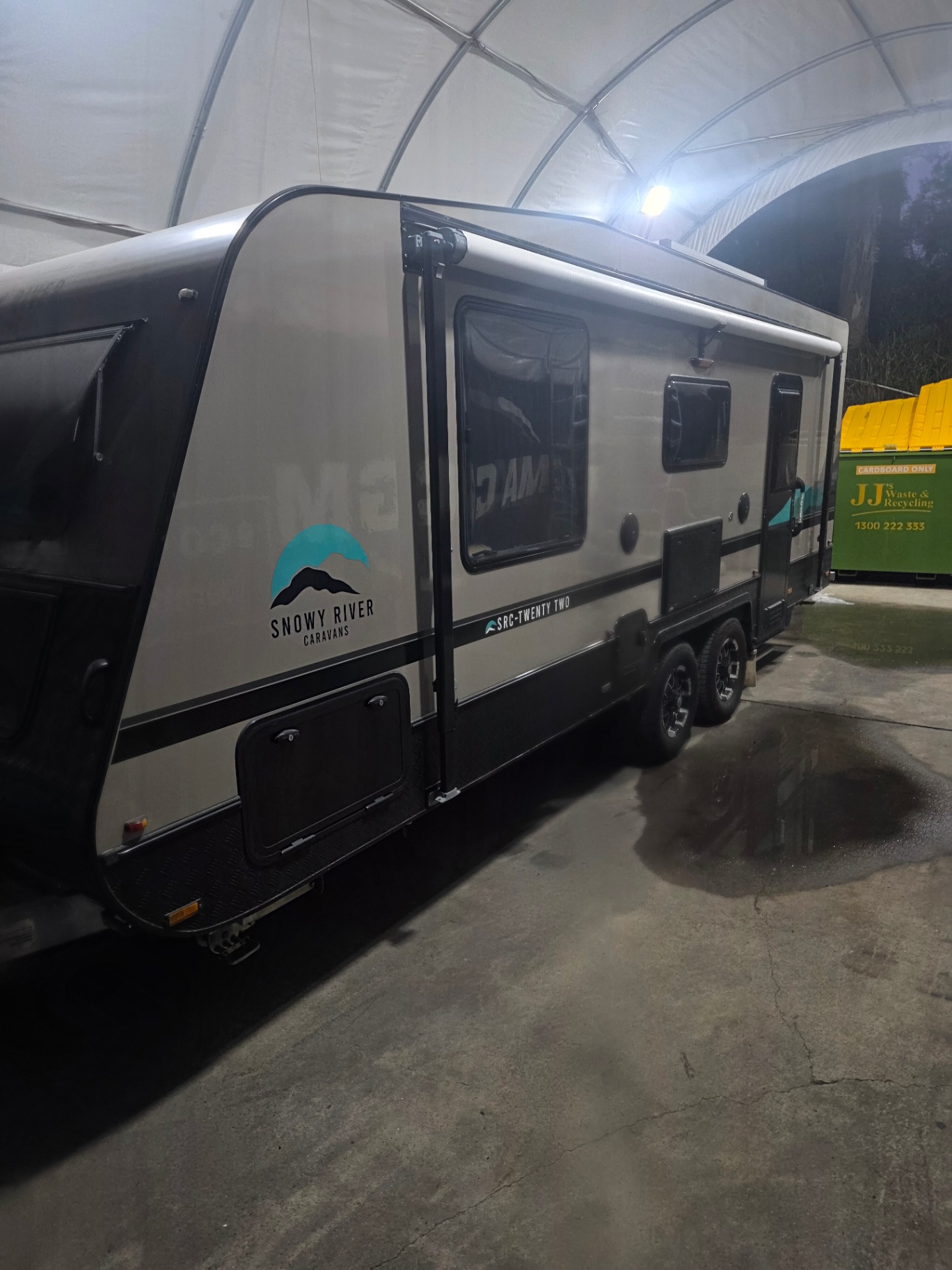
Restore first. Protect second.
This is the part of the job we won't compromise on. A coating is a thin, hard layer that bonds to whatever surface it's applied to. It follows the condition underneath it exactly — gloss stays gloss, chalk stays chalk.
So if your van is faded or oxidised, correcting the surface comes first. Coat over defects and you've sealed them in, and removing that coating later to fix them properly costs more than doing it in the right order.
What ceramic coating actually is
It's a liquid that cures into a hard, chemically bonded layer over the paint or gelcoat. Unlike a wax that sits on top and washes away over months, a coating cross-links with the surface and stays put considerably longer.
What you notice day to day is behaviour rather than appearance. Water beads and sheets off instead of clinging. Dirt has less to grip. The surface feels slick rather than porous.
What it does well
- Strong hydrophobic behaviour — water beads and runs off, carrying dirt with it
- Easier washing between trips, with less scrubbing and less chance of wash marring
- A barrier against everyday contamination: road film, sap, bird droppings and dust
- Slows UV-driven dulling of the corrected surface
- Holds gloss for far longer than a wax or sealant
- Less contamination bonding means less aggressive correction needed later
What it won't do
It won't repair oxidation, remove scratches, hide swirl marks or restore a faded panel. It won't make the van scratch-proof, and it won't stop damage from harsh brushes or truck-wash chemicals.
It also doesn't make washing optional. Contamination left to sit on a coated surface for a season will still bond and dull it. A coating makes maintenance easier and more effective — it doesn't replace it.
We don't quote coating brands, warranty periods or lifespan figures on this page. What a coating gives you depends on your van, how it's stored and how it's washed, and we'd rather talk that through with your actual vehicle in front of us.
Why preparation is most of the job
The application itself is a small part of the time. Almost everything that determines the result happens before the coating comes out — wash, decontamination, correction, then panel preparation to remove polishing oils and residue so the coating can bond properly.
Skip the panel prep and the coating sits on a film of polish residue instead of the surface. That's how coatings fail early, and it's rarely the product's fault.
The coating process
- 01InspectionWe assess the exterior panel by panel and determine what correction is required before any protection is considered.
- 02DecontaminationFull wash and chemical decontamination to remove bonded fallout, sap, mineral deposits and road film.
- 03CorrectionMachine correction appropriate to the surface, because the coating will preserve whatever finish is underneath it.
- 04Panel preparationEvery coated surface is wiped down to strip polishing oils and residue so the coating bonds to bare, clean material.
- 05Ceramic applicationThe coating is applied in controlled sections and levelled correctly, working around trim, mouldings and fittings.
- 06CureThe van is kept dry and undisturbed while the coating cures. Rushing this stage undermines everything before it.
- 07Final inspectionThe exterior is checked in daylight for high spots and evenness, then you get written aftercare guidance.
Living with a coated caravan
- Wash regularly with a pH-neutral shampoo and a clean mitt
- Avoid truck wash, harsh degreasers and stiff brushes
- Rinse after coastal trips to clear salt
- Deal with bird droppings and sap quickly rather than letting them sit
- Store under cover where possible to reduce UV load
Coated vehicles
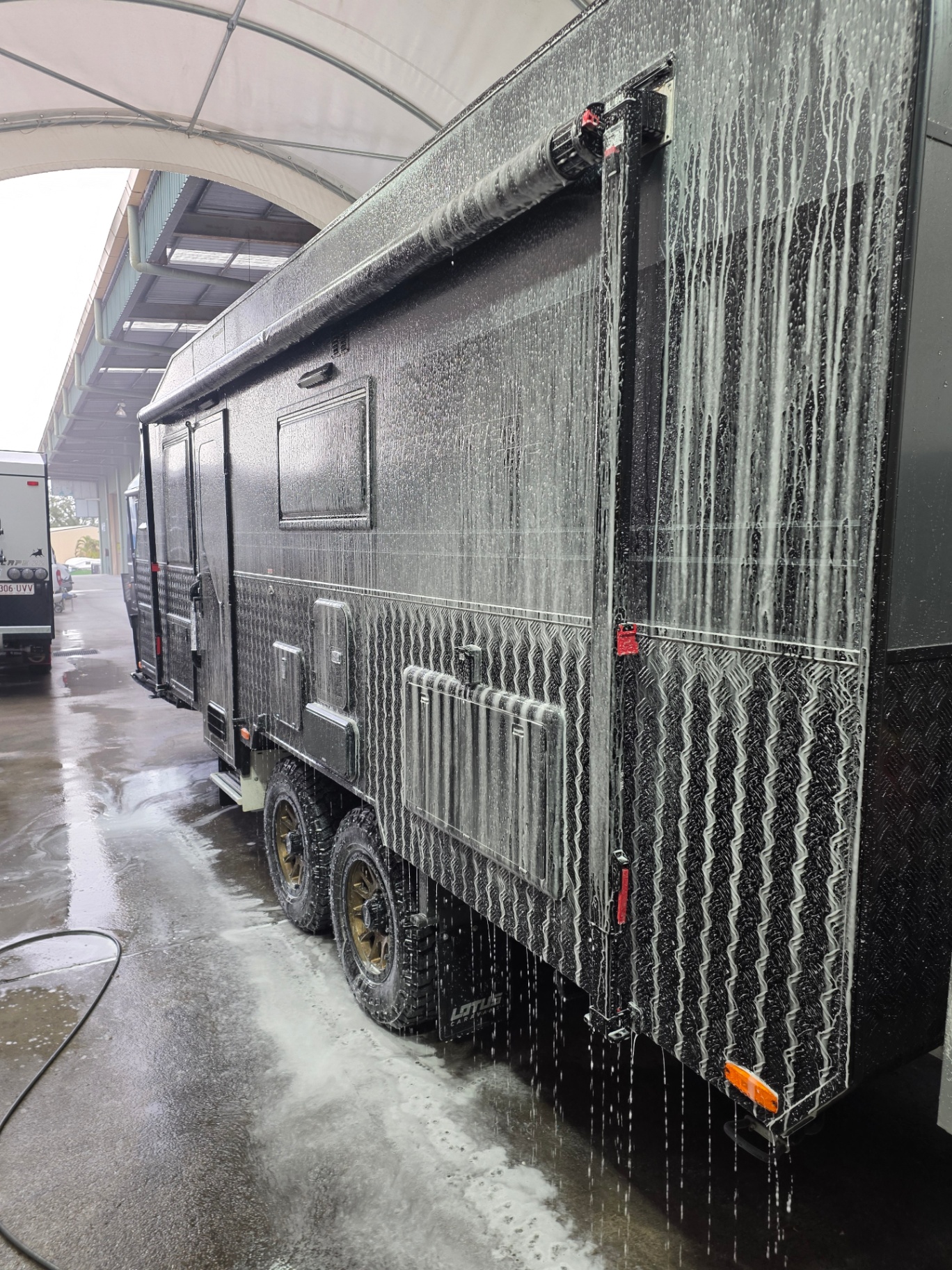
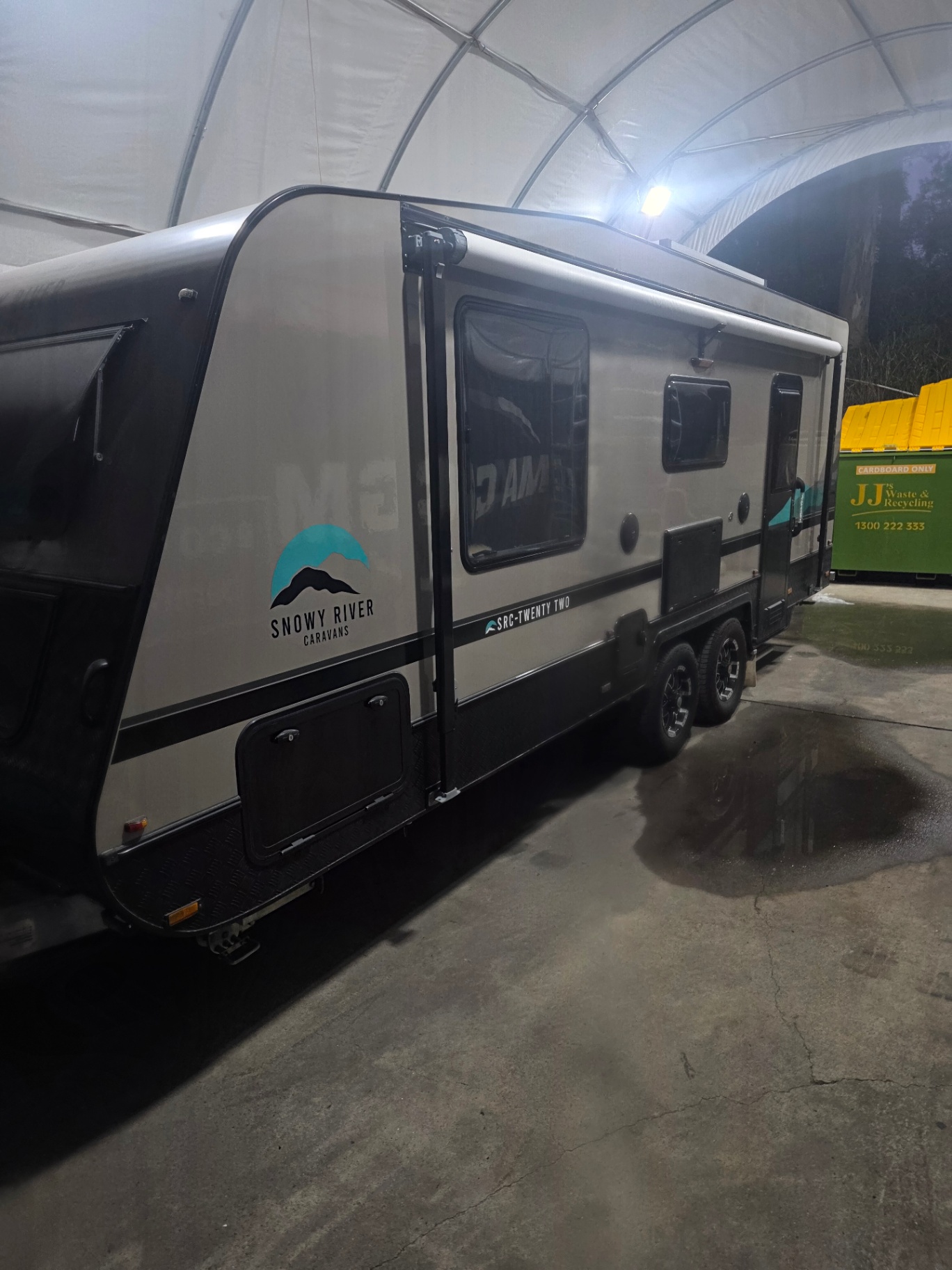
More completed vehicles are in the restoration gallery.
Pricing guide
Ceramic protection from $110 per linear foot
Final pricing depends on the vehicle, surface condition and coating system selected. Correction work is quoted separately because a well-kept van needs far less preparation than a heavily oxidised one — if your van falls into the second group, start with caravan restoration.
Common questions
Is ceramic coating worth it on a caravan?
It's worth it when the surface is in good condition and the van gets used and washed regularly. It makes maintenance easier and slows down how fast the finish deteriorates. On a chalky, uncorrected van it is money spent in the wrong order.
Can you coat over oxidation?
Physically yes, sensibly no. Coating a degraded surface seals in the condition it's in. You end up with a protected dull finish, and correcting it later means removing the coating first.
Does ceramic coating stop scratches?
No. It adds a hard, slick layer that helps with light marring during washing, but it will not prevent scratches, stone chips or damage from branches and brushes.
Do I still have to wash the van?
Yes. A coating makes washing easier and faster, it doesn't replace it. Contamination left sitting on a coated surface for months will still bond and dull the finish.
How is a caravan coating priced?
By linear foot, because length is the fairest measure of surface area on an RV. Correction work needed before the coating is quoted separately, since that varies enormously between vans.
How long does the job take?
Preparation is most of it. Correction plus panel prep, application and cure time typically means the van stays with us for one to three days depending on size and condition.
Related services
Get a ceramic coating quote
Tell us the length of your van, how it's stored and what condition the exterior is in, and send a few photos. We'll come back with what correction it needs first and what the coating will cost on top.