Oxidation & gelcoat · Brisbane
Caravan oxidation removal in Brisbane
If your hand comes away chalky after touching the side of the van, or the colour has gone milky and white, that's oxidation. It is one of the most common problems we deal with in Queensland, and it is also the one people most often try to wash off. Here's what's actually happening and what can be done about it.
What oxidation actually is
Gelcoat is a resin layer with pigment suspended in it. UV light attacks the resin at the very top, breaking the bonds that hold everything together. The resin degrades, the pigment at the surface is left loose and unsupported, and you're left with a fine powder sitting on a rough, porous surface.
That rough surface is why the colour looks wrong. Instead of reflecting light cleanly, it scatters it in every direction. A dark van goes pale and grey, a white van goes yellow-flat, and both look permanently dirty even straight after a wash.
Why it happens faster here
Brisbane gives a caravan a hard time. High UV index for most of the year, long summers, humidity, and most vans stored outside on a driveway or in an open yard between trips.
The pattern is predictable: whichever side faces the afternoon sun goes first, then the front, then the roof-line edges. Owners often notice the difference only when they park next to someone else's van at a park.
Why washing can't fix it
A wash lifts the loose powder off. Underneath it, the degraded resin is still degraded, and within days the surface chalks again as more loose pigment works free.
The same applies to heavy waxes and glazes that promise to restore faded gelcoat. They fill the porous surface temporarily and look good for a few weeks. Nothing has been removed, so nothing has actually been fixed.
Why aggressive polishing isn't the answer either
The instinct is to hit it hard with the heaviest compound available. On some panels that works. On others it removes far more material than the job needed, and gelcoat is finite — once it's gone through to the substrate or a coloured layer beneath, no amount of polishing brings it back.
Edges, corners, raised mouldings and the ribs around hatches are where this goes wrong most often, because the material is thinnest and the machine loads up on them. The correct process is the least aggressive one that achieves the result.
How we test the surface first
The test section is also where you get a truthful preview. You'll see the corrected patch next to the untouched panel and know exactly what you're paying for before the full job starts.
- 01BeforeThe panel is washed and decontaminated so we're assessing the real surface, not what's sitting on it. We note the severity across the van — it is rarely even.
- 02Test sectionA small marked-off area is corrected with the mildest combination likely to work, then stepped up only if needed. This tells us how the gelcoat responds and how much correction it will take.
- 03CorrectionWith the process set, the van is worked panel by panel. Badly oxidised areas take multiple cutting passes; better areas get less. Pads are changed often because saturated pads stop cutting and start smearing.
- 04Finished surfaceA refining stage removes cutting haze and restores clarity, then protection goes on so the freshly opened surface isn't left exposed.
Can all caravan oxidation be removed?
No. That's the honest answer and it's worth being clear about it.
The result depends on the severity of the oxidation, how much sound material remains beneath it, whether the van has previous repairs or resprays, and the condition of the material itself. Light and moderate oxidation usually corrects very well. Severe, long-standing oxidation on a thin or previously polished surface may improve significantly without ever returning to a full, deep gloss.
Where a panel has degraded past the point of correction, we'll tell you, show you on the test section, and let you decide. We don't promise 100% correction on any van, and you should be cautious about anyone who does.
Keeping it from coming straight back
- Protect the corrected surface rather than leaving it bare
- Wash regularly so contamination doesn't sit and bake on
- Avoid harsh brushes and truck-wash chemicals
- Store under cover where you can, even a shade sail helps
- Deal with fading early — light oxidation is far cheaper to correct
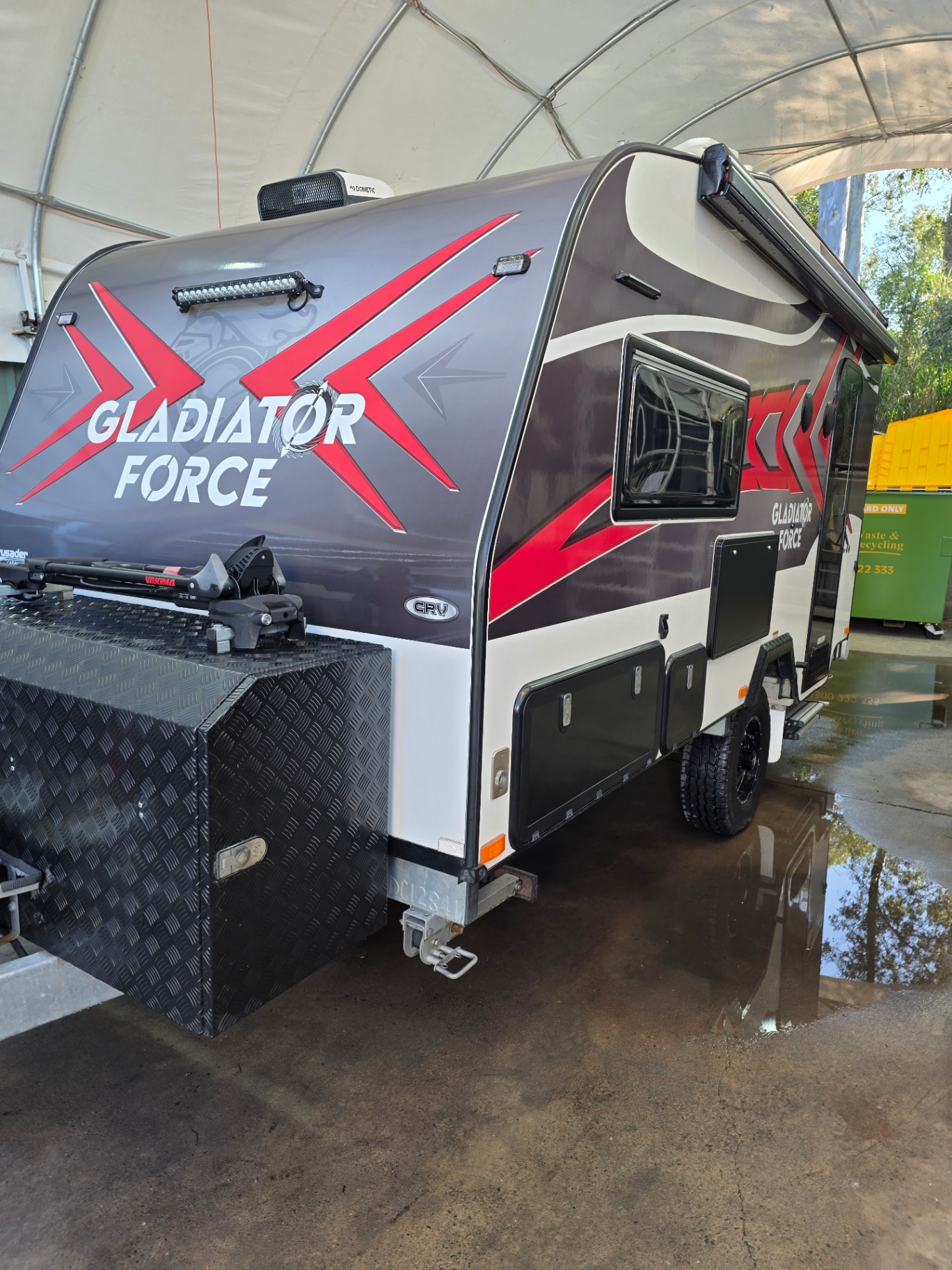
Oxidation work we've completed
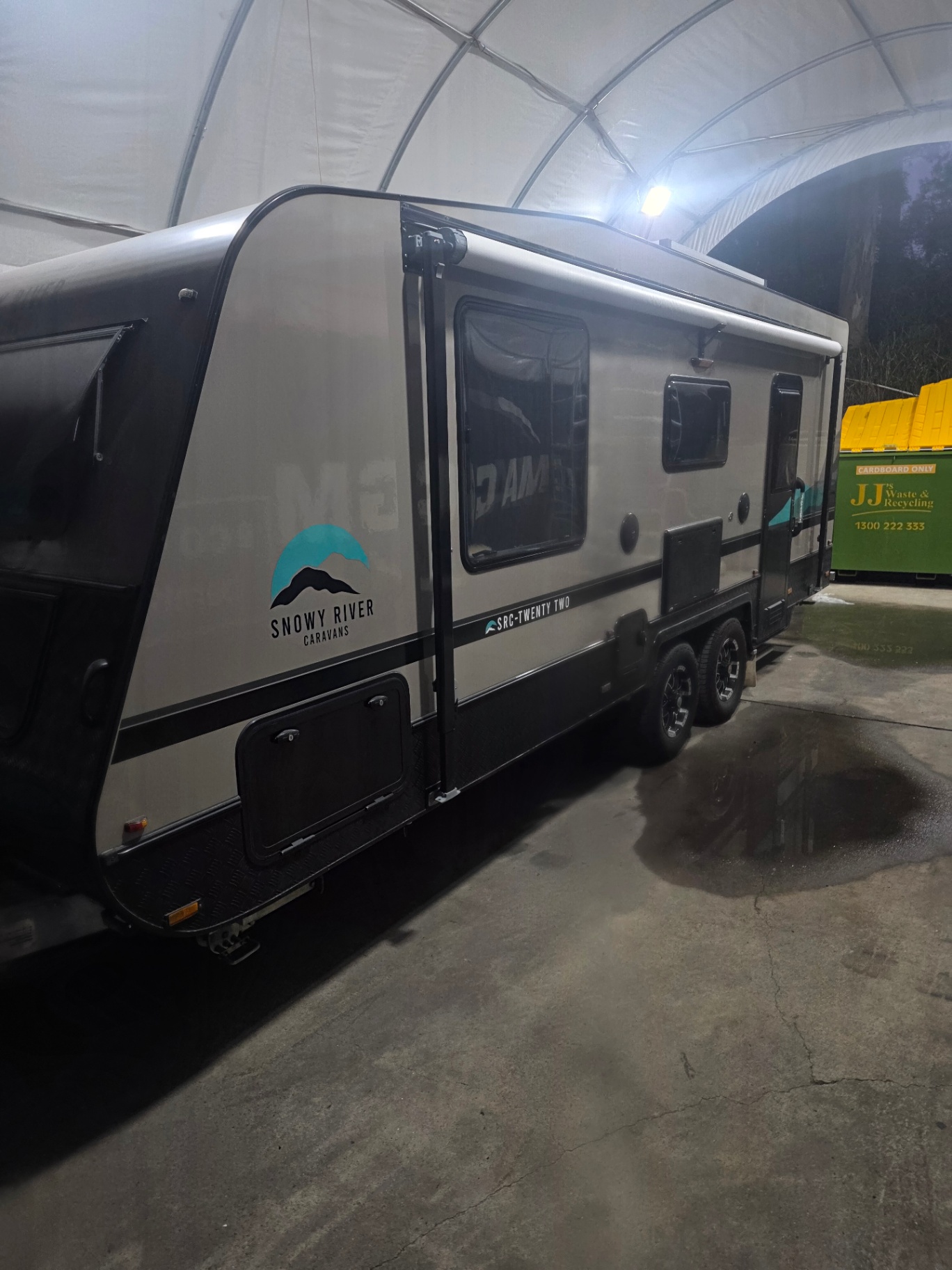
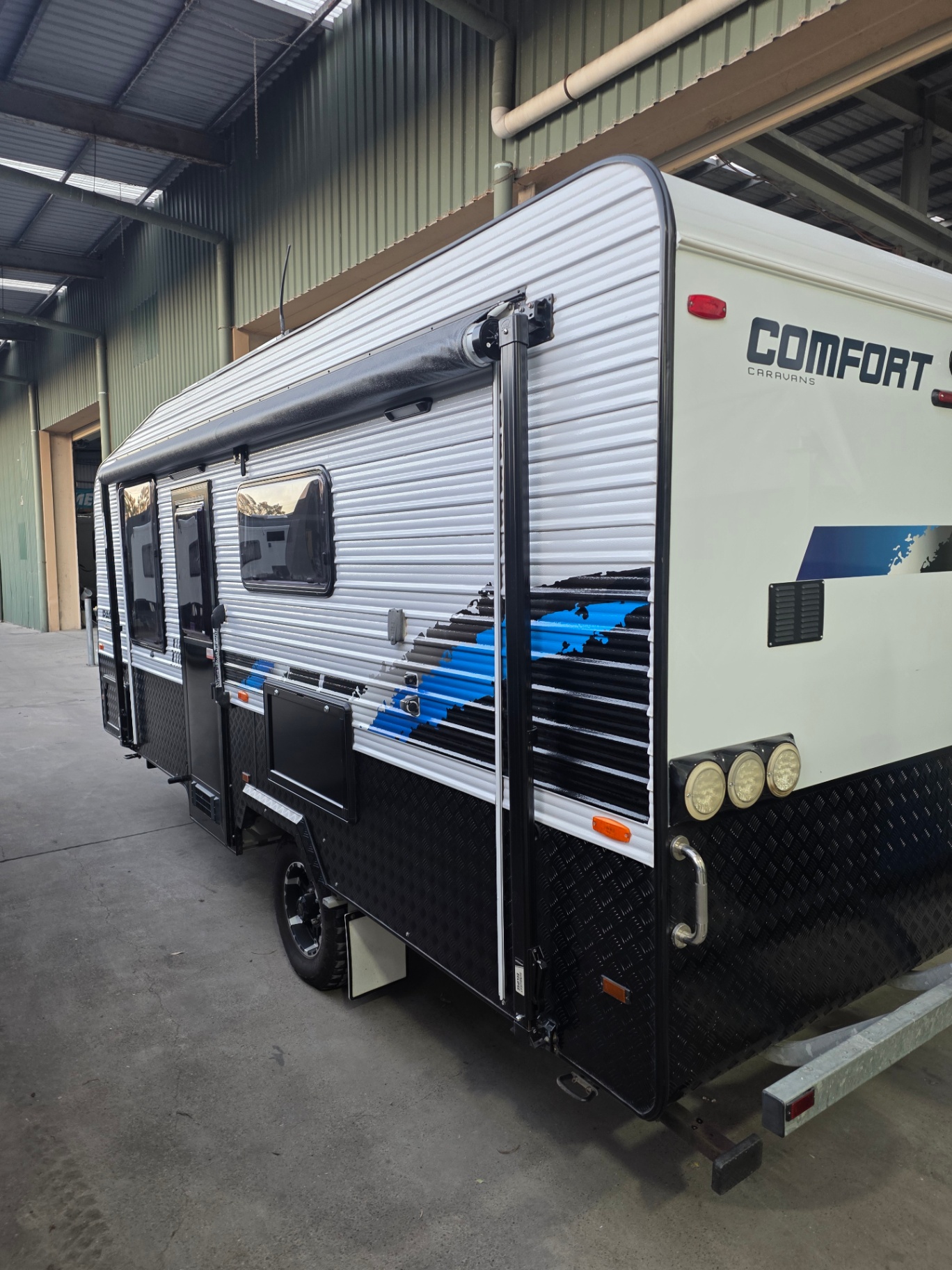
More completed vehicles are in the restoration gallery.
Pricing guide
Heavy oxidation restoration from $1,500
Severe cases are quoted individually after assessment, because the number of correction stages is the single biggest cost driver. Photos of the worst side in daylight, plus your van's length and your Brisbane suburb, are enough for us to give you a realistic range.
Common questions
What causes caravan oxidation?
UV breaks down the resin at the surface of the gelcoat, leaving loose pigment behind. That loose pigment is the chalk you can rub off with a finger, and it scatters light instead of reflecting it, which is why the van looks milky.
Why won't washing remove oxidation?
Washing removes what sits on top of the surface. Oxidation is the surface itself having degraded, so soap and water take off the loose powder for a day and the chalk is back after the next dry spell.
Can all caravan oxidation be removed?
No. It depends on severity, how much sound material is left underneath, previous repairs and the condition of the panel. Some vans correct almost completely, others improve substantially without reaching a full gloss finish. A test section is the only reliable answer.
Will the oxidation come back?
It can, if the restored surface is left bare in full sun. Protection after correction is what slows it down, along with regular washing rather than leaving contamination to bake on.
Is a heavy compound the fastest way to fix it?
Fast and risky. Aggressive cutting without testing removes more material than necessary and can go through on edges and mouldings, which turns a correctable van into a paint job.
How much of my van needs to be done?
Usually the sun-facing sides and front are the worst. We assess each panel, but a partial job often looks inconsistent, so most owners end up doing the full exterior.
Send photos of your oxidised caravan
Photograph the worst-affected side in daylight, plus the front and rear. Tell us the length and your suburb, and we'll let you know whether the surface is a good candidate for correction before you spend anything.