Caravan restoration · Brisbane
Caravan restoration in Brisbane
Older vans that have spent years in the Queensland sun don't usually need replacing or repainting. Most of the damage sits in the top of the surface, and that is what restoration deals with. Here's what the work involves and how we work out what your van will realistically come back to.
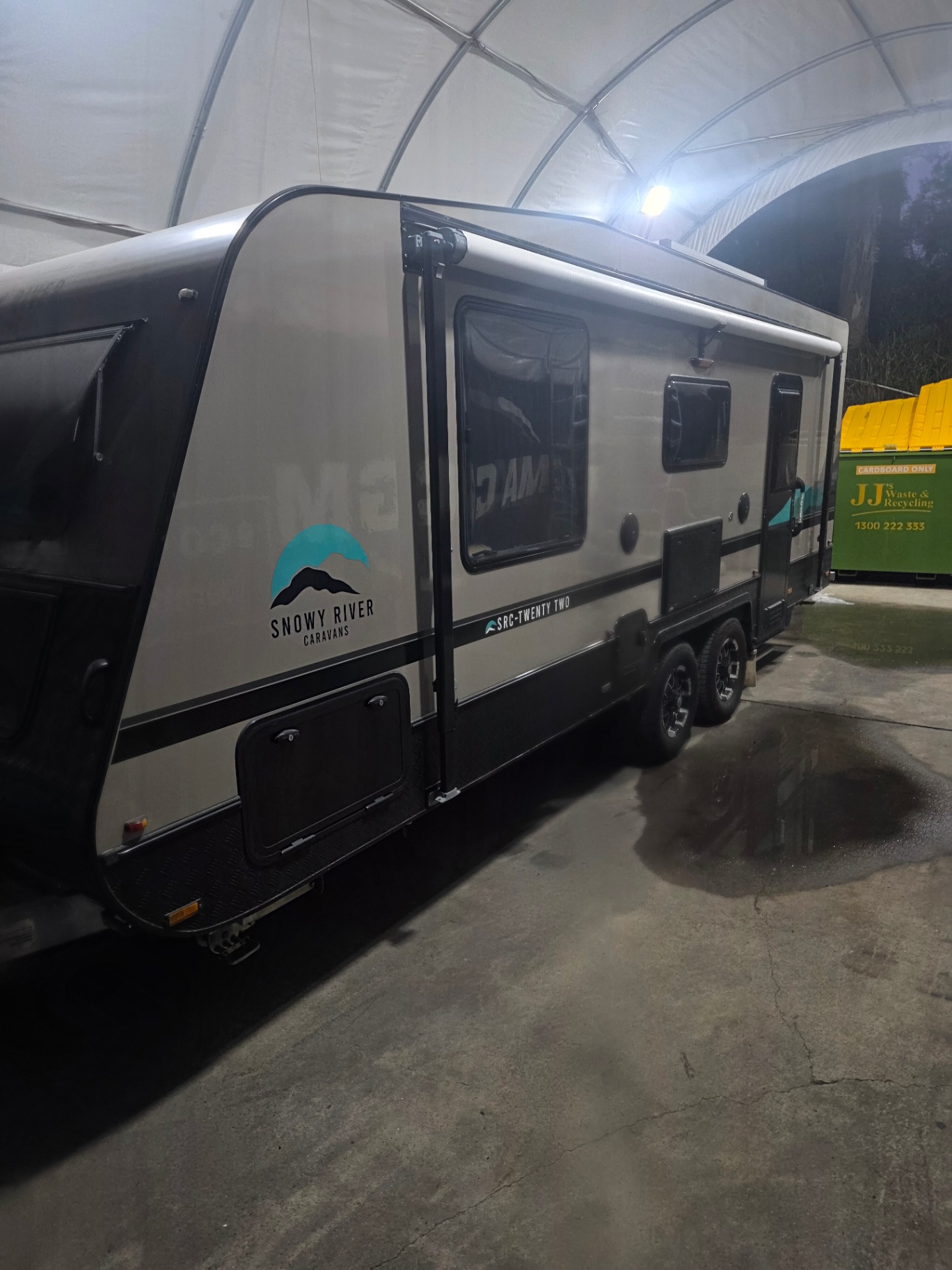
What caravan restoration means here
Restoration is corrective work on the existing exterior. We're removing the failed, weathered layer, correcting what's underneath, and then protecting the result. It is different from a detail, which cleans and dresses a surface without changing its condition.
A van comes out of a detail looking cleaner. A van comes out of a restoration looking materially different, because the dead surface is gone.
What Queensland sun does to a caravan exterior
UV is the main driver of nearly everything we deal with. Brisbane vans typically live outside, on a driveway or in a storage yard, exposed for most of the year. Over time the resin at the surface of gelcoat breaks down and the pigment is left loose — that's the chalky feel and the milky, faded colour.
Painted composite panels fade differently, losing depth and gloss and going flat rather than chalky. Add humidity, coastal salt from trips down the coast, sprinkler minerals and tree sap, and you get a surface with several problems layered on top of each other.
- Oxidation — chalky, powdery gelcoat that dulls the whole van
- Faded gelcoat with milky, washed-out colour
- Dull paint that has lost depth and reflection
- Old decals that have hardened, cracked and yellowed
- Adhesive residue left behind by earlier decal removal
- Decal ghosting — the outline where the surface weathered unevenly
- Bonded contamination, sap, road film and water etching
What can and can't be brought back
Surface-level problems respond well: oxidation, fading, dullness, staining, marring and light scuffing are all correctable to varying degrees. Most of the transformation people expect from a respray comes from fixing exactly these things.
What restoration can't do is rebuild material. Cracked or crazed gelcoat, deep scratches through to the substrate, hail dents, delaminated panels, previous repairs that were colour-matched badly and surfaces already polished through — none of that is corrected by machine work. Some of it is a repair job, and we'll tell you when that's the case.
Why every restoration starts with assessment
Two vans of the same age and brand can need completely different processes. One may have lived under a carport, the other in full sun on the western side of a yard. The only way to know is to inspect the surface and test it.
Aggressively attacking a van without testing is how surfaces get burnt through — most obviously on edges, corners and raised mouldings where the material is thinnest. Once you go through, the fix is paint, not polish. We take the slower route on purpose.
Cosmetic detailing versus genuine restoration
A glaze or heavy wax can temporarily mask oxidation. The van looks noticeably better for a few weeks, then the fillers wash out and the chalk returns, because nothing was actually removed.
Restoration removes the failed layer instead of hiding it. It takes longer and costs more, and it is the only version of the work that lasts.
The Pitts restoration process
- 01InspectionEvery panel is checked in good light. We record oxidation severity, decals, previous repairs, thin areas and anything that limits what's achievable.
- 02Wash and decontaminationFull exterior wash, then chemical decontamination to remove bonded fallout, sap, film and mineral deposits so nothing gets dragged across the surface.
- 03Surface assessmentWe confirm the material on each section — gelcoat, painted composite, cladding, mouldings — because each takes a different approach.
- 04Test sectionA small area is corrected first. This sets the pad, compound and machine combination and shows you the realistic outcome before the full job.
- 05CorrectionThe van is worked panel by panel with the stages the surface needs, from a single corrective pass to multi-stage cutting on badly oxidised areas.
- 06RefinementA refining stage removes cutting haze and brings clarity back, which is where the depth in the finish comes from.
- 07ProtectionA sealant at minimum, or a ceramic coating where the surface and your usage suit it, so the restored finish isn't left bare.
- 08Final inspectionThe whole van is checked in daylight, edges and seams cleaned up, and we walk you through the result and the aftercare.
Before and after
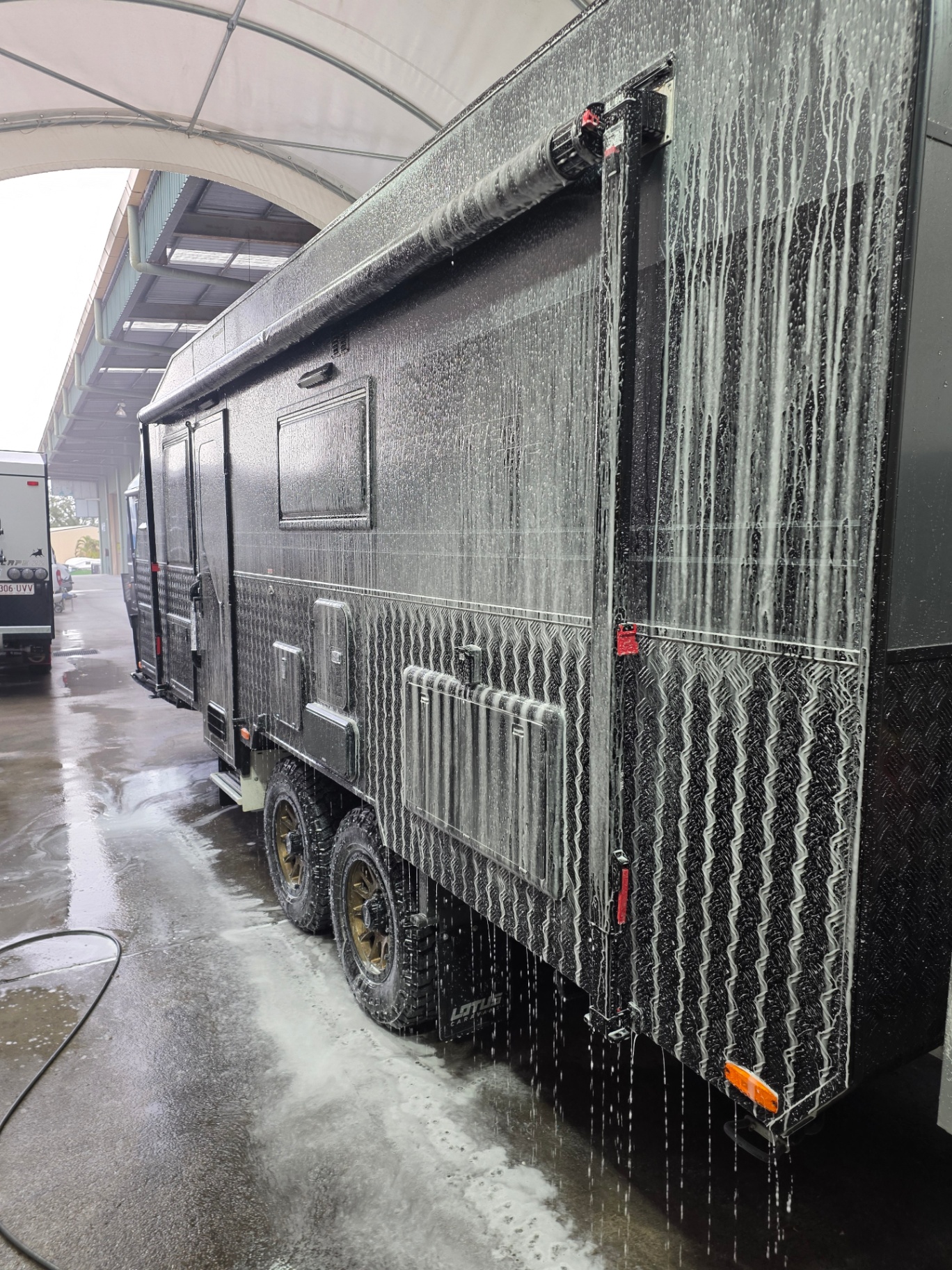
The images below are vans we've worked on around Brisbane. Every vehicle shown here has been restored by our team — the difference in each case came from correcting the existing surface, not from paint.
Before & after: vans we've restored
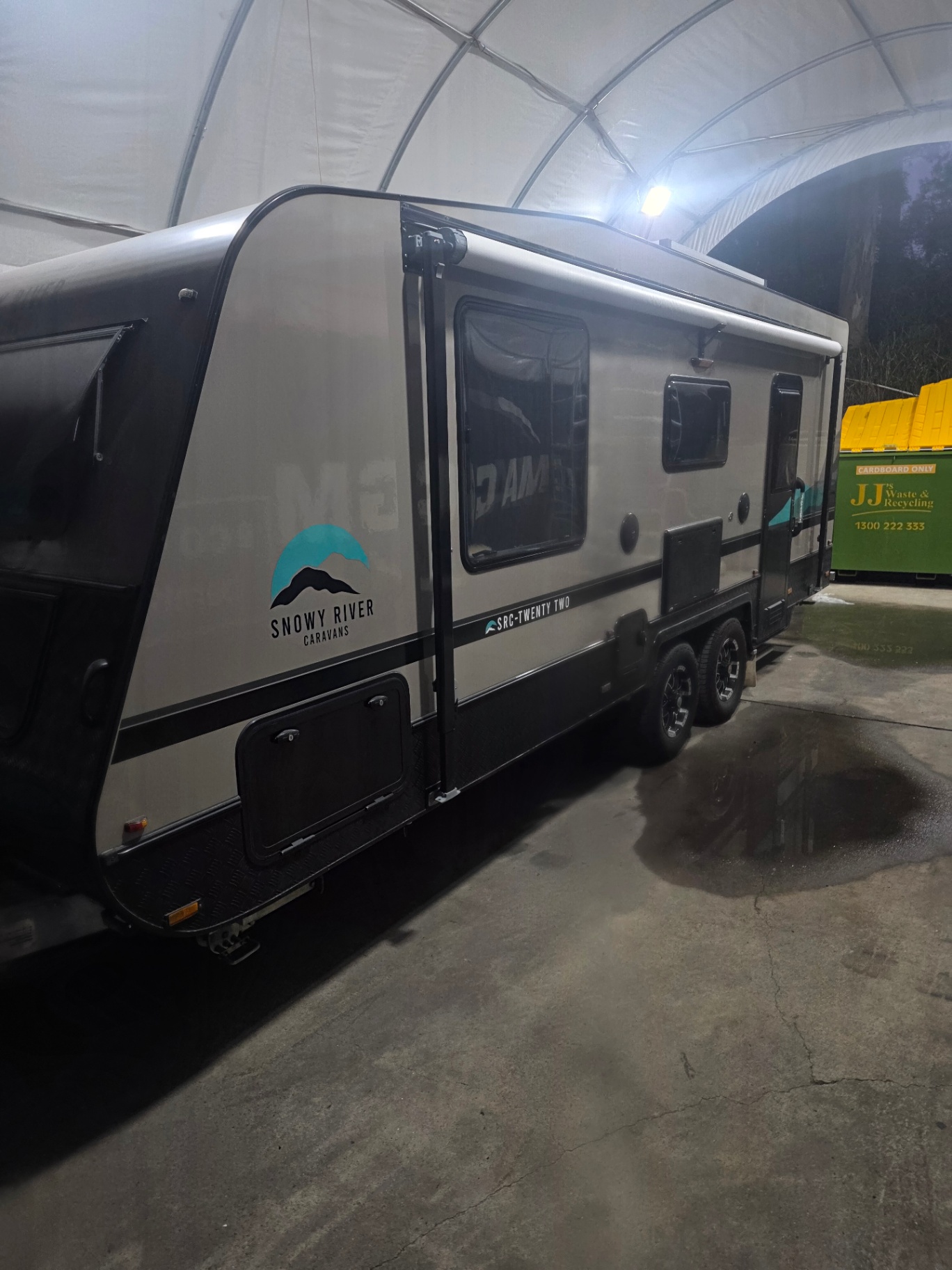
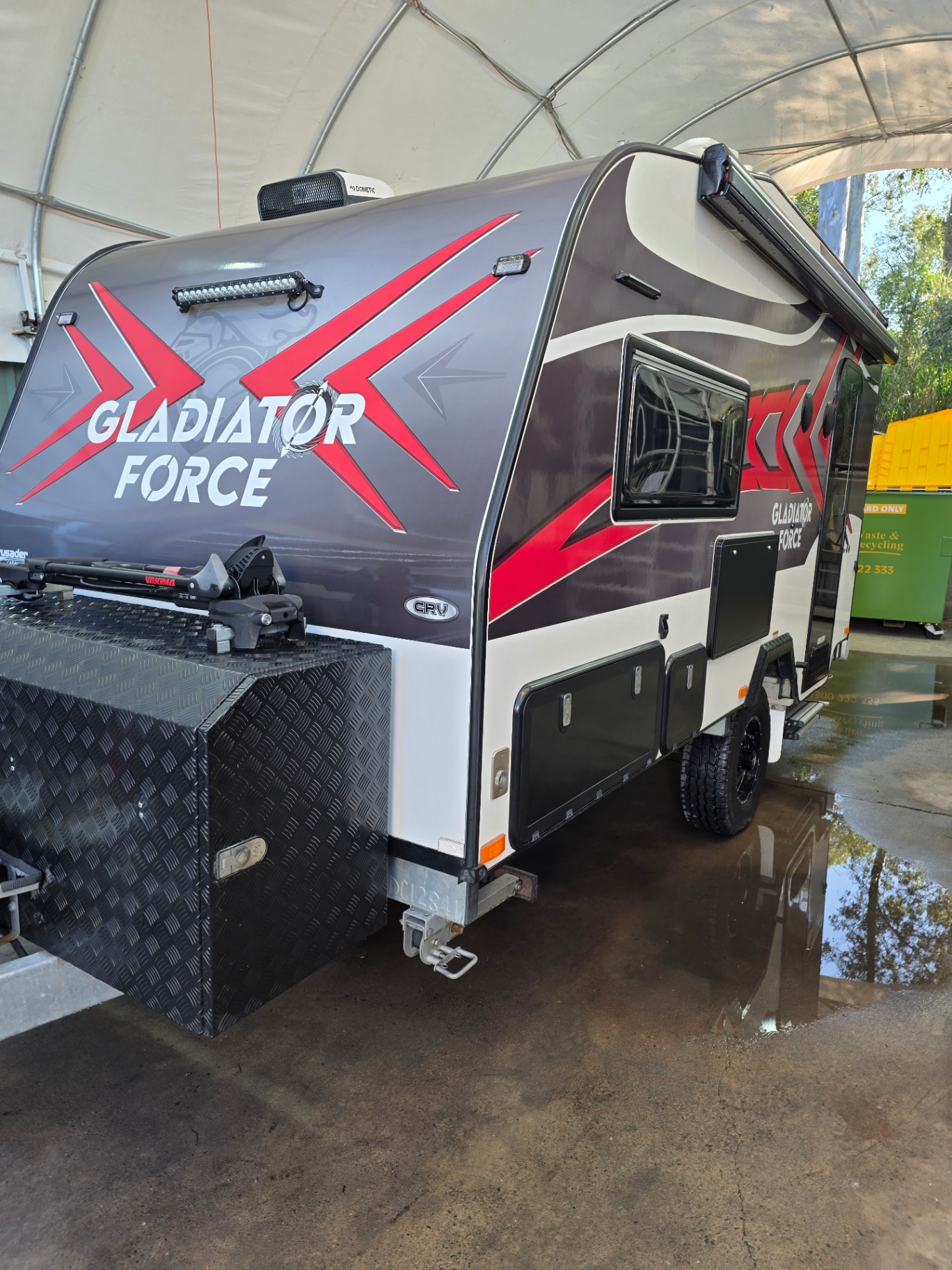
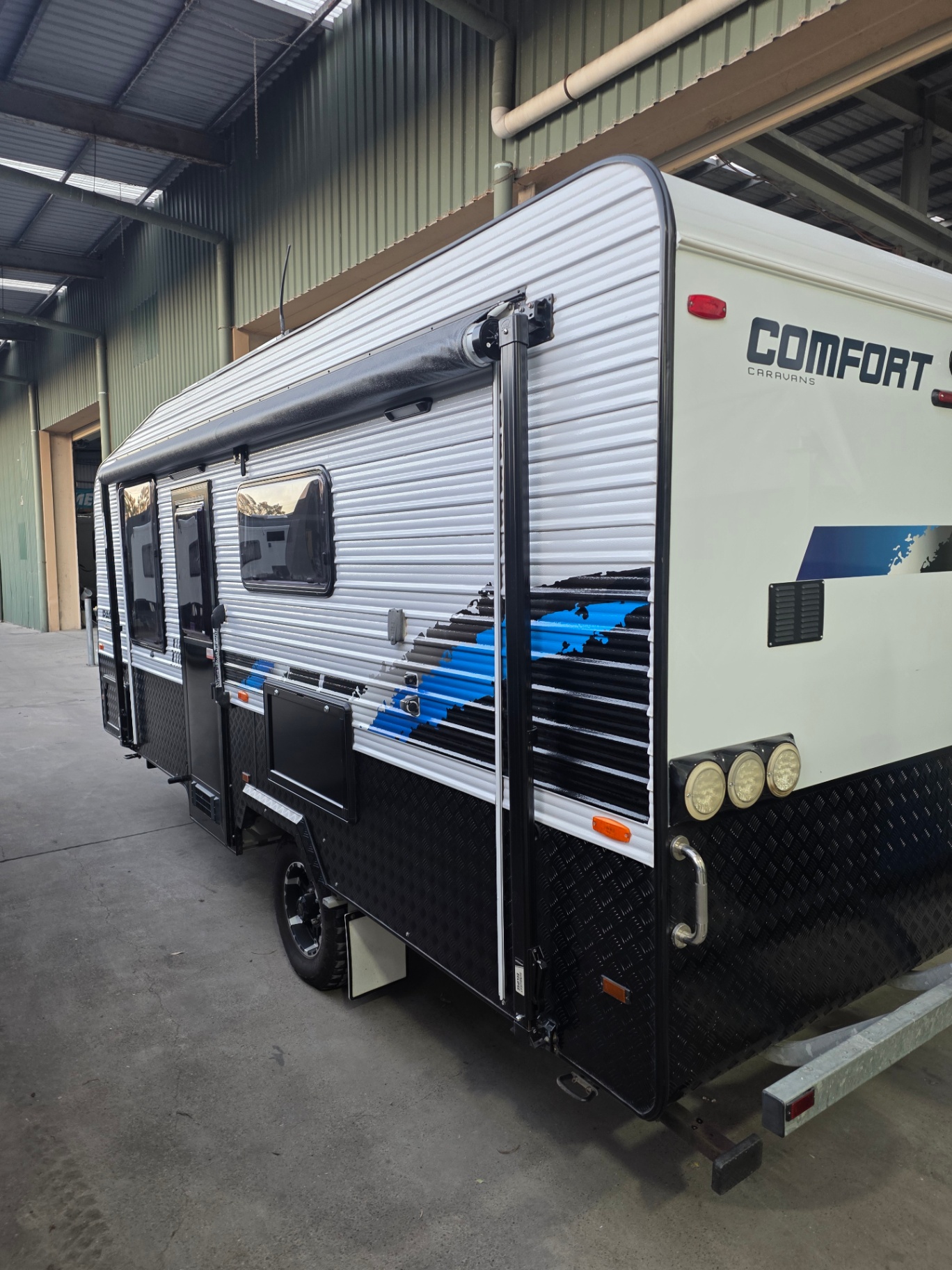
More completed vehicles are in the restoration gallery.
Pricing guide
Caravan restoration from $1,500
Severe oxidation and extensive restoration are quoted individually after assessment. Length, surface condition, decal work and the number of correction stages all move the figure, so photos of each side, the front and the rear give you a far more accurate number.
Common questions
Is my caravan too far gone to restore?
Often not. Vans that look hopeless from ten metres away frequently come back well, because the damage is in the very top of the surface. The honest answer comes from a test section, not a photo, though photos tell us whether it is worth booking one.
How long does a full caravan restoration take?
Typically one to three days depending on length, how many stages the surface needs, and whether decals are coming off. Vans needing decal removal and ghosting work sit at the longer end.
Do I need to repaint my caravan?
Not always. Repainting is a big spend, and a lot of vans quoted for a respray only needed the existing surface restored. If restoration genuinely won't get you a result, we'll say so rather than take the job.
Will the restoration hold, or will it fade again?
It will hold far longer if it is protected and washed properly. Bare, restored gelcoat left in full Queensland sun starts oxidising again. That's why we recommend a sealant at minimum and a ceramic coating where it suits.
Do you come to me or does the van come to you?
Restoration work is best done in a controlled space with power, water and shade. Get in touch with your location around Brisbane and we'll sort out the arrangement that suits the job.
Can you restore a van that has already been polished badly?
Sometimes. Previous over-polishing can leave the surface thin or burnt through in spots, which limits what can safely be taken off. We check for this during the inspection.
Related services
Send photos of your caravan
A few clear photos of each side, the front and the rear in daylight tell us most of what we need. Include your make, model, approximate length and your Brisbane suburb and we'll come back with an honest assessment.