Motorhome restoration · Brisbane
Motorhome restoration in Brisbane
A motorhome is a large, tall vehicle with an automotive cab bolted to an RV body, and it doesn't restore the same way a caravan does. There's more surface, more height, more fittings to work around and two different finishes that have to end up matching.
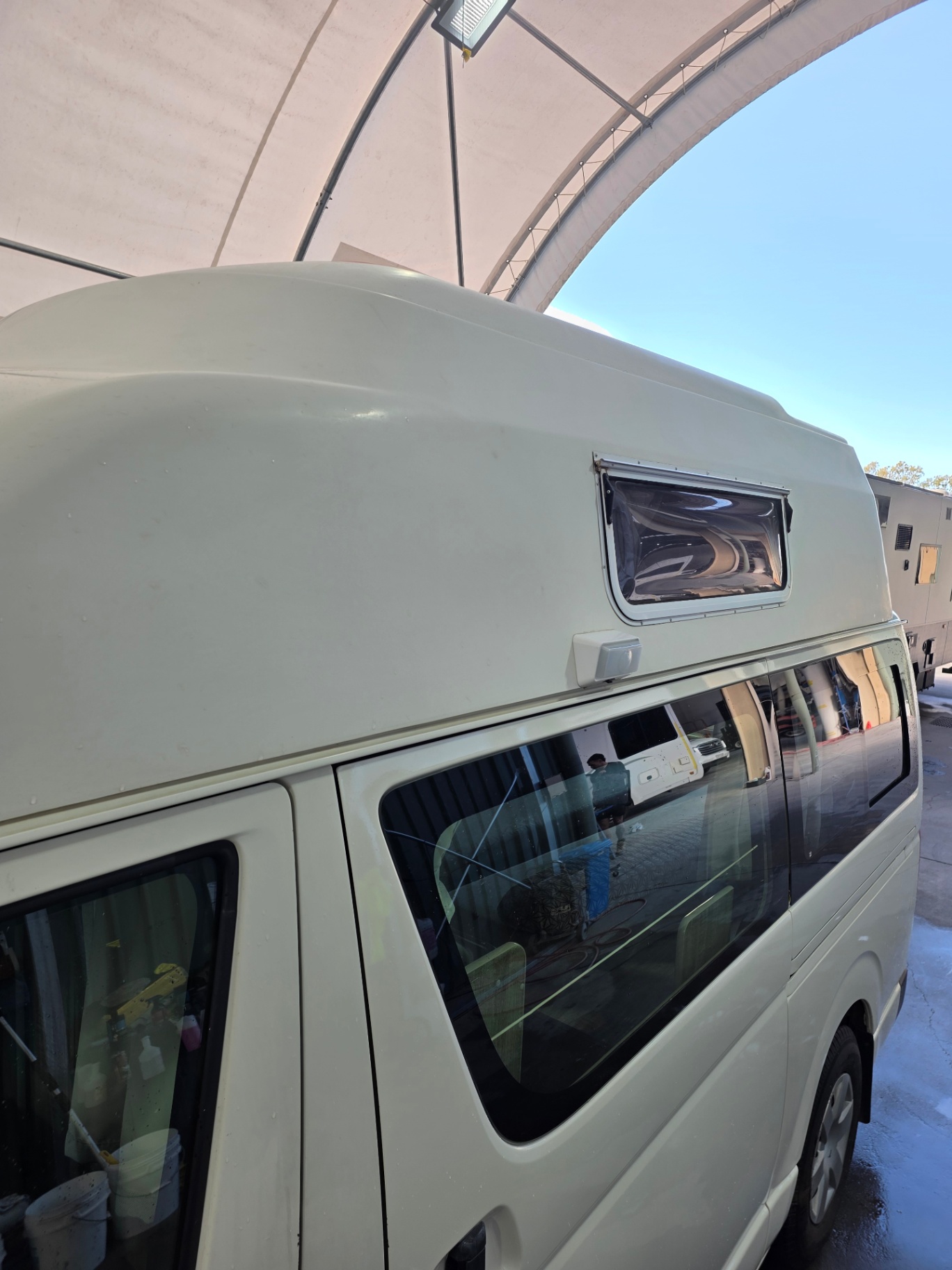
Why motorhomes are their own job
The scale changes the approach. A 7-metre motorhome can carry two to three times the correctable surface of a mid-size caravan, spread across tall flat walls, a sloped luton, a cab and a rear wall crowded with fittings.
It also has two distinct finishes. The cab is automotive paint over a factory panel and behaves like a car. The habitation body is usually gelcoat or a painted composite that responds differently to compounds, heat and machine speed. Get one right and the other wrong and the vehicle looks mismatched in daylight.
What we typically find on an older motorhome
- Heavy fade and oxidation across the sun-facing wall and luton
- A cab in noticeably better condition than the body, or vice versa
- Hardened ex-rental or business graphics that have gone brittle
- Ghosting outlines where earlier graphics were pulled off
- Streaking down from awning rails, roof edges and seals
- Black run marks from sealant and roof runoff
- Chalky, greyed plastic trim, mirror housings and mouldings
- Hazed exterior glass and mineral etching from sprinklers
Working at height, and access
A motorhome's upper wall and luton front are usually the worst-affected areas and the hardest to reach. That work is done from proper access rather than stretched off a ladder, because machine polishing needs control and consistent pressure to avoid holograms and burn-through on edges.
The rear of a motorhome is the slowest section on most vehicles — ladders, spare wheel carriers, lights, vents and bike racks all mean hand work around fittings rather than open panel time. It's a real part of the quote.
Roof considerations
We assess the roof rather than assuming it's part of the job. Access and safety come first, and roof materials are often different to the walls — some are membrane or coated surfaces that should not be machine polished at all.
Where the roof is a suitable, safely accessible surface, cleaning and decontamination make a real difference to how much staining runs down the walls afterwards. Where it isn't, we say so.
Large-area machine polishing
Big flat walls sound easy and aren't. Consistency is the challenge: pads saturate faster on large areas, and a pad that has stopped cutting starts smearing, which shows up as patchy gloss across a long panel.
We work in mapped sections with frequent pad changes and check the finish under angled light as we go, because a section that looks perfect wet-with-polish can look very different once it's wiped down and the sun hits it.
Motorhome restoration can include
Not every vehicle needs everything on that list. After assessment we'll tell you which items will actually change how the motorhome looks and which are spend for very little visible return.
- Exterior wash and chemical decontamination
- Oxidation correction on faded gelcoat and painted panels
- Machine cut and polish across the body and cab
- Gelcoat correction where the surface allows
- Decal and graphics removal
- Adhesive and residue removal
- Ghosting reduction around former graphics
- Exterior glass cleaning and decontamination
- Trim and plastic restoration on faded mouldings
- Ceramic protection over the corrected surface
Preparing a motorhome for sale
Presentation moves the needle on a motorhome more than most vehicles, because buyers read a faded, branded exterior as neglected maintenance everywhere else.
For a sale we'd usually prioritise removing old branding, correcting the front and sun-facing side so it photographs well, tidying the trim and glass, and applying protection so it still looks right at inspection weeks later. That's a more targeted brief than a full restoration and it's quoted that way.
Restoring an older motorhome you're keeping
If you're holding onto it, the priorities change. It's worth going further on correction and worth protecting the result properly, because you're the one washing it for the next decade.
The same honesty applies as with any vehicle: crazed gelcoat, deep scratches, previous repairs and panels already polished thin will not be fixed by machine work. We'll show you on a test section what the surface can actually do before you commit.
Motorhome work
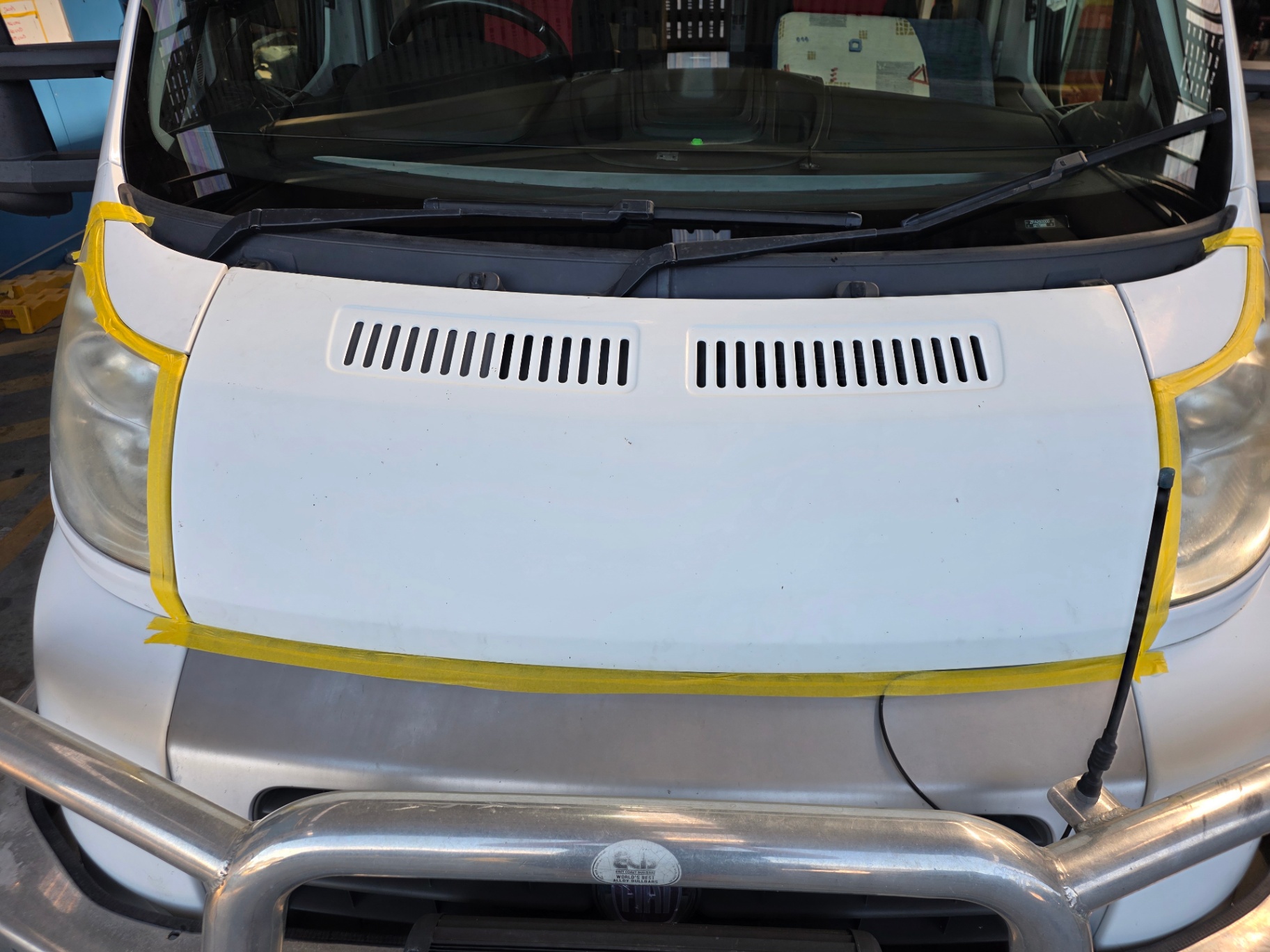
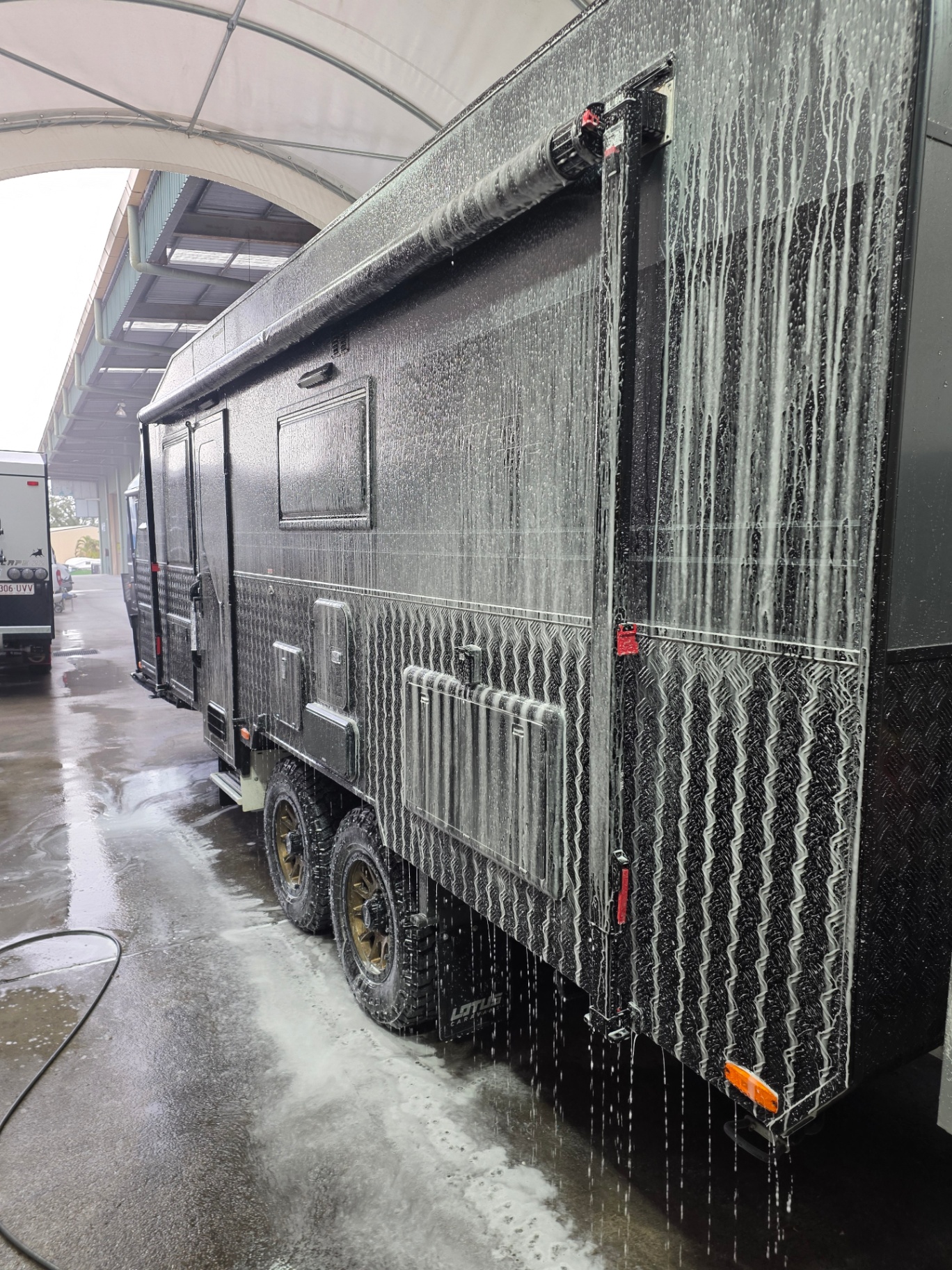
More completed vehicles are in the restoration gallery.
Pricing guide
Motorhome restoration from $1,500
Larger motorhomes and severe oxidation require individual assessment. Length, height, access, the number of fittings, graphics and how many correction stages the surface needs all affect the final figure.
Common questions
How long does a motorhome restoration take?
Longer than a caravan of the same nominal length, because of the cab, the height and the amount of hand work around fittings. Most jobs run two to three days, and heavily oxidised or decal-heavy vehicles longer.
Do you polish the cab as well as the body?
Yes, and they usually need different treatment. The cab is automotive paint over steel or composite; the body is often gelcoat or painted panel. Matching the finish between the two is part of the job.
Can you remove ex-rental or ex-commercial graphics?
That's a common job. Large graphics come off with controlled heat and adhesive removers, then the surrounding surface is corrected to reduce the ghosting the graphics leave behind.
What about the roof?
Roofs are assessed separately. Access and safety come first, and the roof material is often different to the walls. We'll tell you what's practical rather than promising a fully polished roof on every vehicle.
I'm selling my motorhome — what's worth doing?
Usually decal removal if it carries old branding, correction on the sun-facing sides and front, and a protective finish. That's what changes how the vehicle presents in photos and at an inspection.
Do you take on fleet or subcontract work?
Our focus is direct-to-customer restoration on individual vehicles rather than high-volume fleet production.
Related services
Get your motorhome assessed
Send us the make, model, length and your Brisbane suburb, along with photos of each side, the front, the rear and any graphics. We'll come back with what the vehicle needs and a realistic price.