Caravan cut & polish · Brisbane
Caravan cut & polish in Brisbane
If your van still looks tidy up close but has gone flat, dull and lifeless in the sun, a machine cut and polish is usually what brings it back. Here is what the process actually involves, what it can and can't fix, and why the price moves with size and condition.
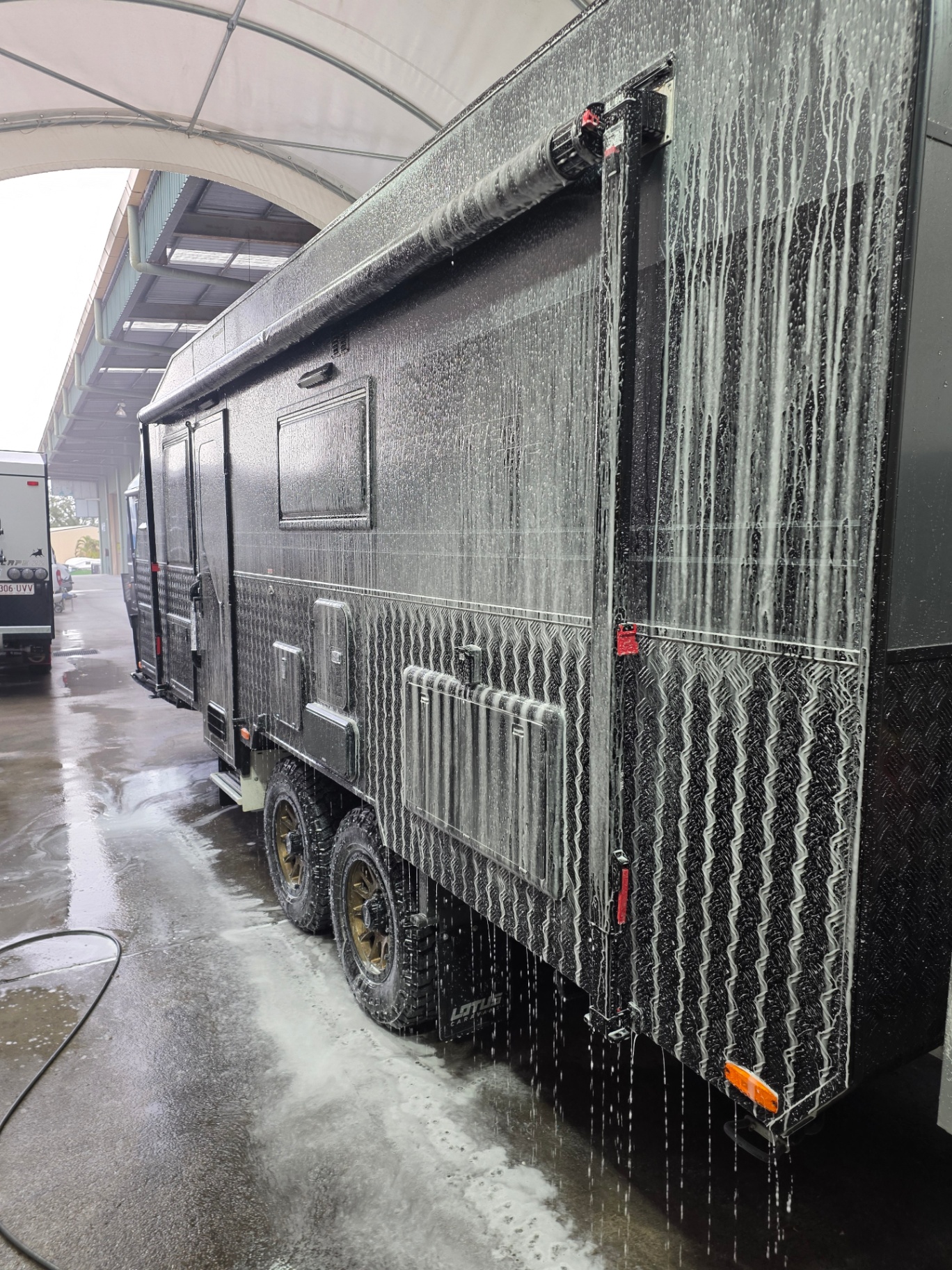
What a caravan cut and polish actually is
A cut and polish is two jobs in one. The cut is an abrasive stage that levels the very top of the surface to remove the oxidised, scratched and weathered layer. The polish is the refining stage that removes the haze left by cutting and brings back clarity and gloss.
Skipping the refining stage is a common shortcut. It looks acceptable in the shed and then shows as a dull, hazy finish once the van is outside in daylight.
Why a caravan isn't polished like a car
Caravan exteriors are a mix of materials. You might have painted composite panels on one van, gelcoat on another, aluminium cladding, checkerplate, fibreglass mouldings and vinyl decals — often on the same vehicle. Each responds differently to abrasives and heat.
The panels are also large, flat and vertical, which changes how the machine has to be worked. Then there's the size: a 22ft van has several times the surface area of a sedan, and the corners, seams, awning rails, hatches and window surrounds all need hand attention that a car simply doesn't have.
What we can realistically improve
What polishing will not do is fill or remove deep scratches, repair cracked gelcoat, correct hail damage or bring back a surface that has already been polished through to primer by someone else. If we find any of that during assessment, you'll be told before we quote, not after.
- Dull, flat surfaces that no longer reflect light
- Light to moderate oxidation and UV fade
- Wash marring and swirl marks from harsh brushes
- Water spotting and mineral etching from sprinklers and bore water
- Road film and traffic staining that washing won't shift
- Light scuffing and transfer marks from branches or park posts
Basic polish, one-step correction, or full restoration?
- 01Enhancement polishFor newer vans in good condition. One refining stage to lift gloss and clean up light marring. It improves the finish rather than correcting it.
- 02One-step cut and polishThe most common choice. A single combined cutting and finishing stage that removes a good share of light oxidation and defects with a strong improvement in gloss.
- 03Multi-stage restorationFor vans that are chalky, badly faded or heavily defected. Separate compounding and refining stages, and it belongs under caravan oxidation restoration rather than a standard polish.
Decontamination comes before any machine work
Polishing a dirty surface drags contamination across the panel and creates new scratches. Before a pad touches the van we wash the exterior, treat the bonded contamination that a wash leaves behind, and clean out seams and edges where dust and residue collect.
In Brisbane the usual culprits are tree sap, sprinkler and bore water minerals, salt from coastal trips and years of road film baked on by the sun. All of it has to come off first.
How we assess your caravan before correcting it
- 01Walk the vanWe look at every panel in good light and note oxidation, decals, previous repairs and any thin or repainted areas.
- 02Check the materialPainted panel, gelcoat and cladding all get treated differently, so we confirm what we're working with.
- 03Cut a test sectionA small area is corrected first so you can see the achievable result before committing to the whole vehicle.
- 04Set the processPad, compound and machine combination are locked in based on the test, then the van is worked panel by panel.
- 05Refine and protectThe surface is refined to remove haze, then a protective sealant is applied so the work doesn't sit unprotected.
What the finished result looks like
Expect a genuine, visible lift in gloss, colour depth and reflection — the difference you notice from across a caravan park. Expect a surface that washes more easily because the contamination and dead layer are gone.
Don't expect a brand-new van. Older gelcoat can only be brought back so far, and we would rather set that expectation at the quote than have you disappointed at handover.
When a cut and polish isn't the right job
If the surface leaves a white chalky residue on your hand, if the colour has gone milky across whole panels, or if the van has been sitting outside untouched for years, a standard polish will lift it briefly and it will look flat again quickly. That van needs heavier oxidation work.
Same story with old graphics. If there are aged decals you want gone, removing them first means the whole panel can be corrected evenly instead of leaving a sharp line where the decal used to sit.
Why the price moves
- Overall length and how much wall, front and rear surface there is
- How far the oxidation has progressed
- Number and condition of decals and awning fittings
- Previous repairs, resprays or earlier polishing work
- Whether the surface needs one stage or several to correct
- Whether you want ceramic protection applied afterwards
Caravans we've polished
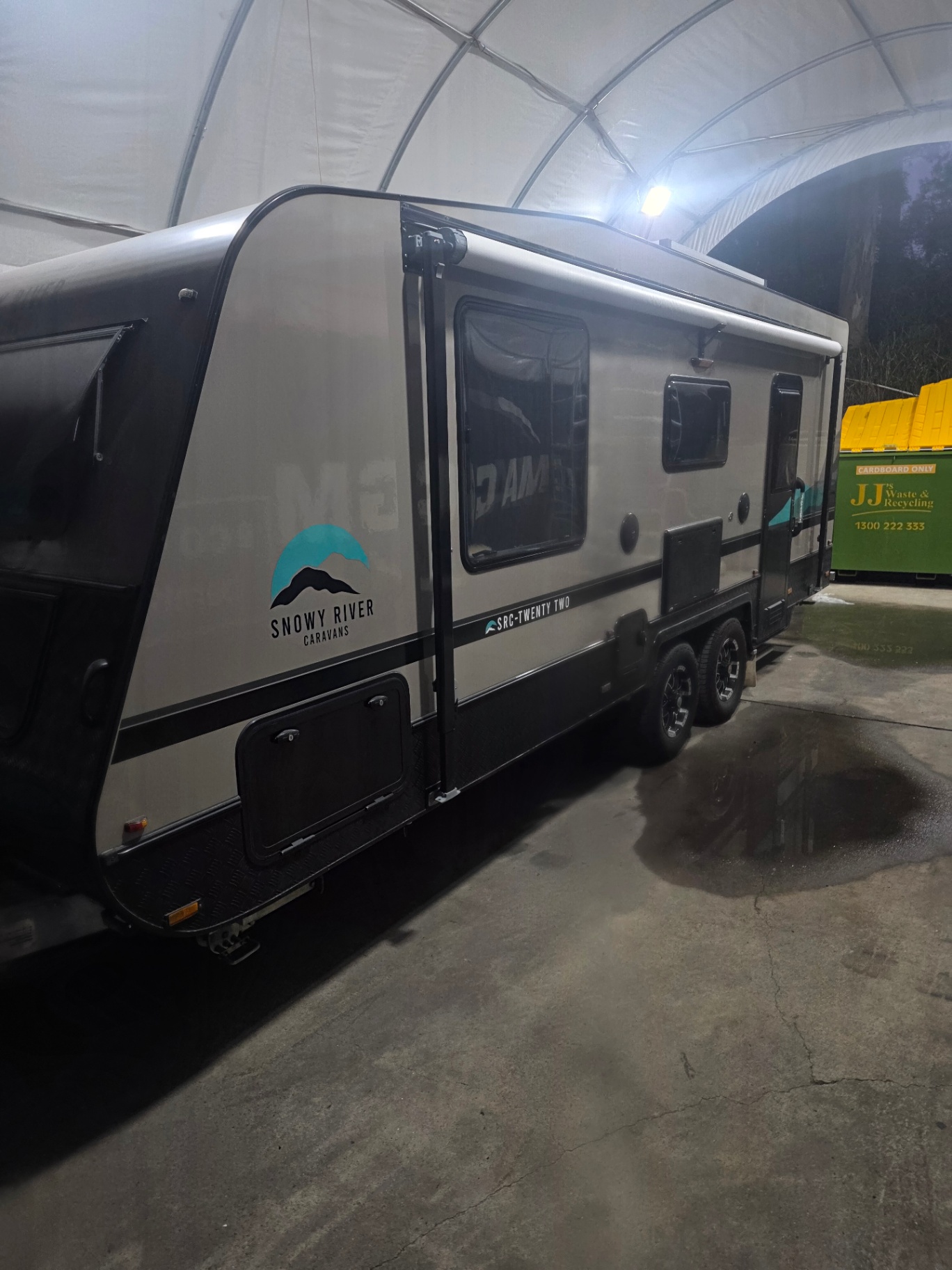
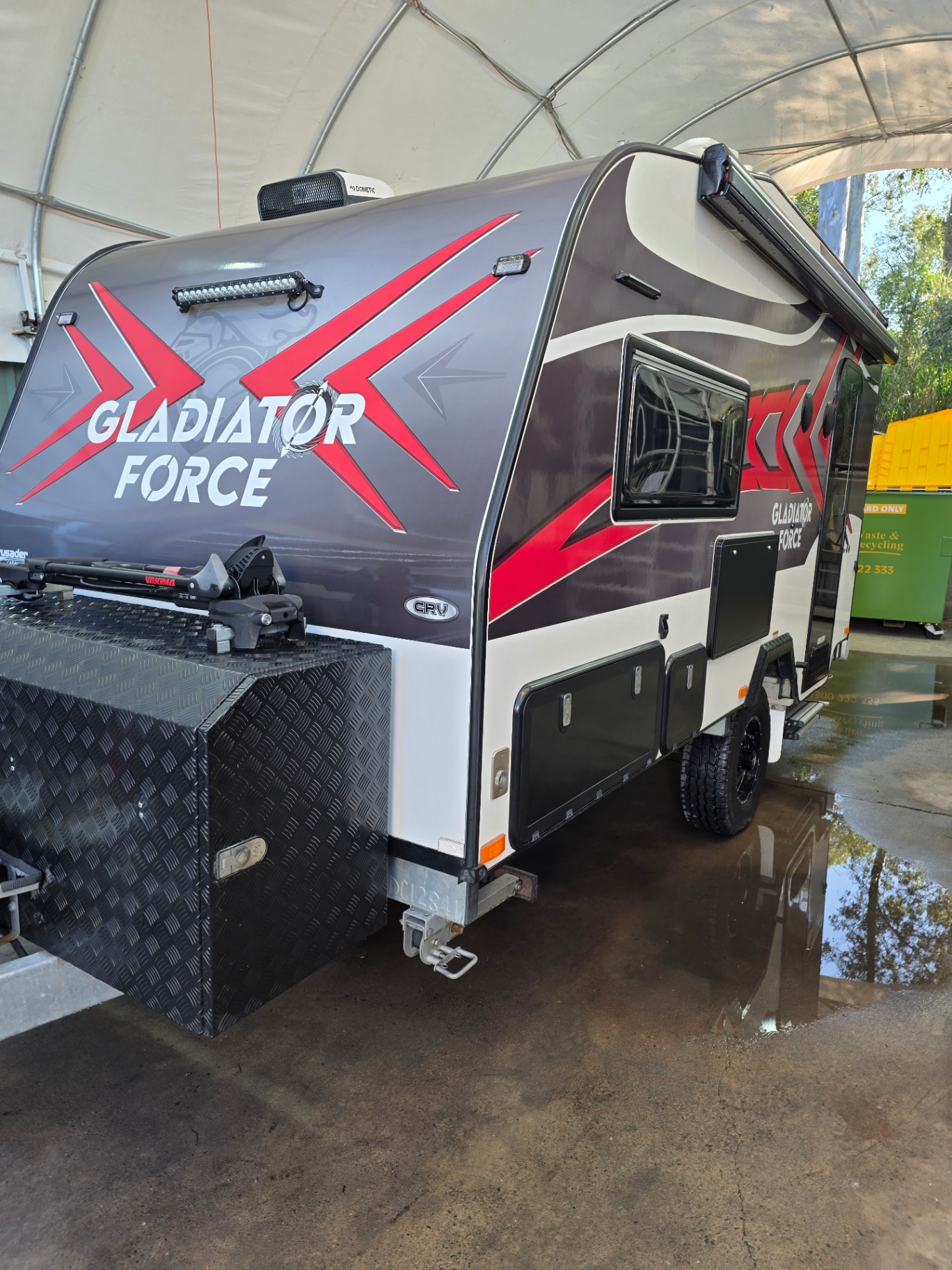
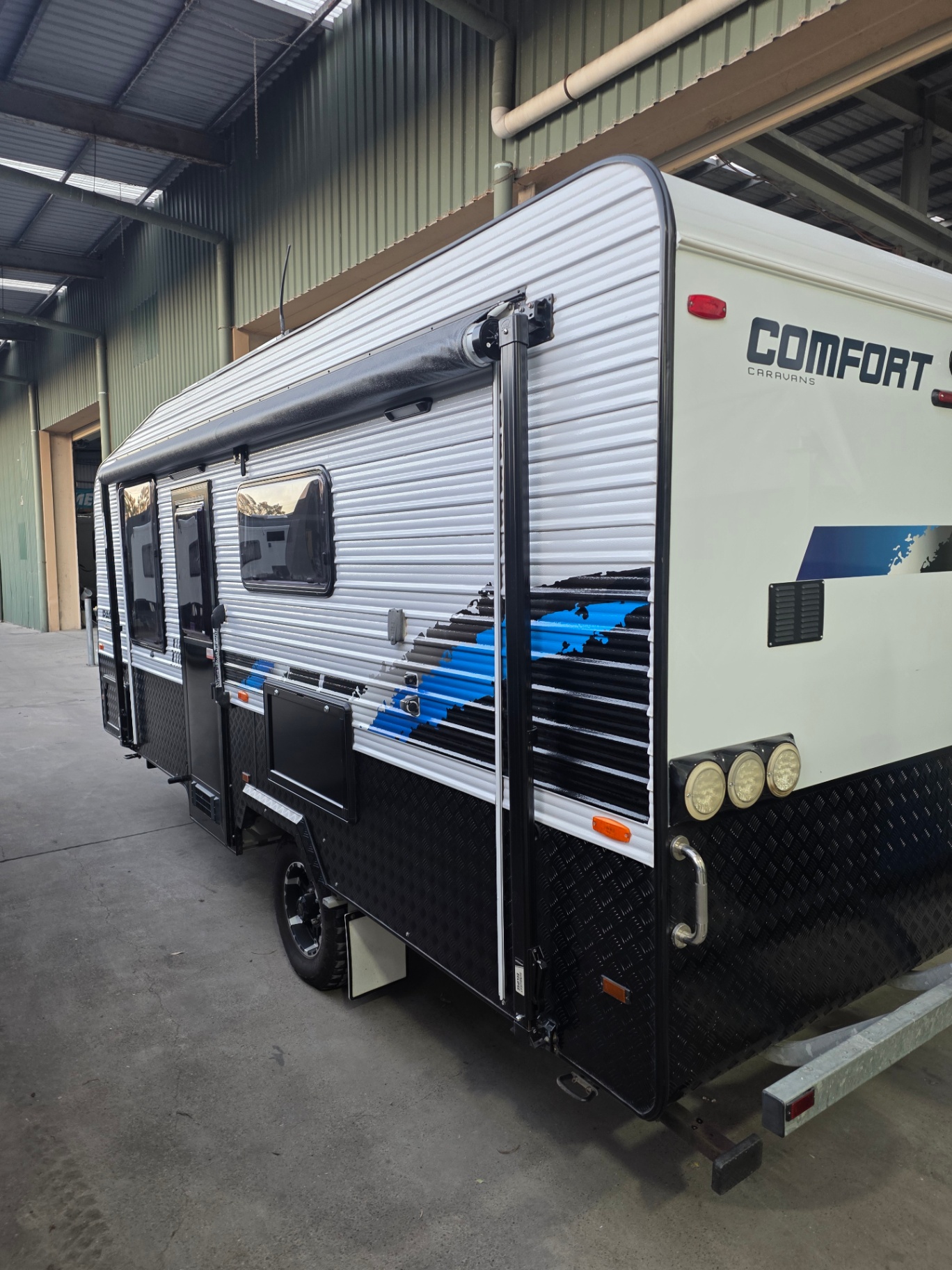
More completed vehicles are in the restoration gallery.
Pricing guide
RV cut & polish from $1,100
Final pricing depends on the length of the vehicle, the condition of the surface, how far oxidation has progressed, the decals present and how much correction the finish needs. Send photos of each side, the front and the rear and we'll give you a realistic figure.
Common questions
How long does a caravan cut and polish take?
Most vans between 17ft and 22ft take a full day, and longer vans or heavily defected surfaces can run into a second day. We give you a time estimate with the quote rather than after we start.
Will a cut and polish fix chalky, faded gelcoat?
Light fading usually responds well. Once the surface is chalky and leaves white residue on your hand, it has moved past a standard polish and needs oxidation restoration, which is a heavier, multi-stage process.
Do you polish the roof as well?
Only where it is safe to access and the surface is suitable. Roofs are often a different material to the walls and are assessed separately.
Can you polish a caravan with old decals still on it?
Yes, we polish around them. If the decals are lifting or you plan to remove them later, it is usually better to remove them first so the surface can be corrected evenly.
How long will the finish last?
That depends on storage and washing. A van kept under cover and washed properly holds gloss far longer than one parked in full Brisbane sun. Adding a ceramic coating extends it further.
Related services
Get your caravan assessed
Send through your make, model, approximate length, your Brisbane suburb and a few photos of each side. We'll tell you whether a cut and polish is the right call or whether the surface needs more.