Decal removal & ghosting · Brisbane
Caravan decal removal in Brisbane
Taking old graphics off a caravan is the easy half of the job. What's left behind — adhesive, staining and the outline where the surface weathered around the decal — is the part that decides whether the van looks properly finished or just stripped.
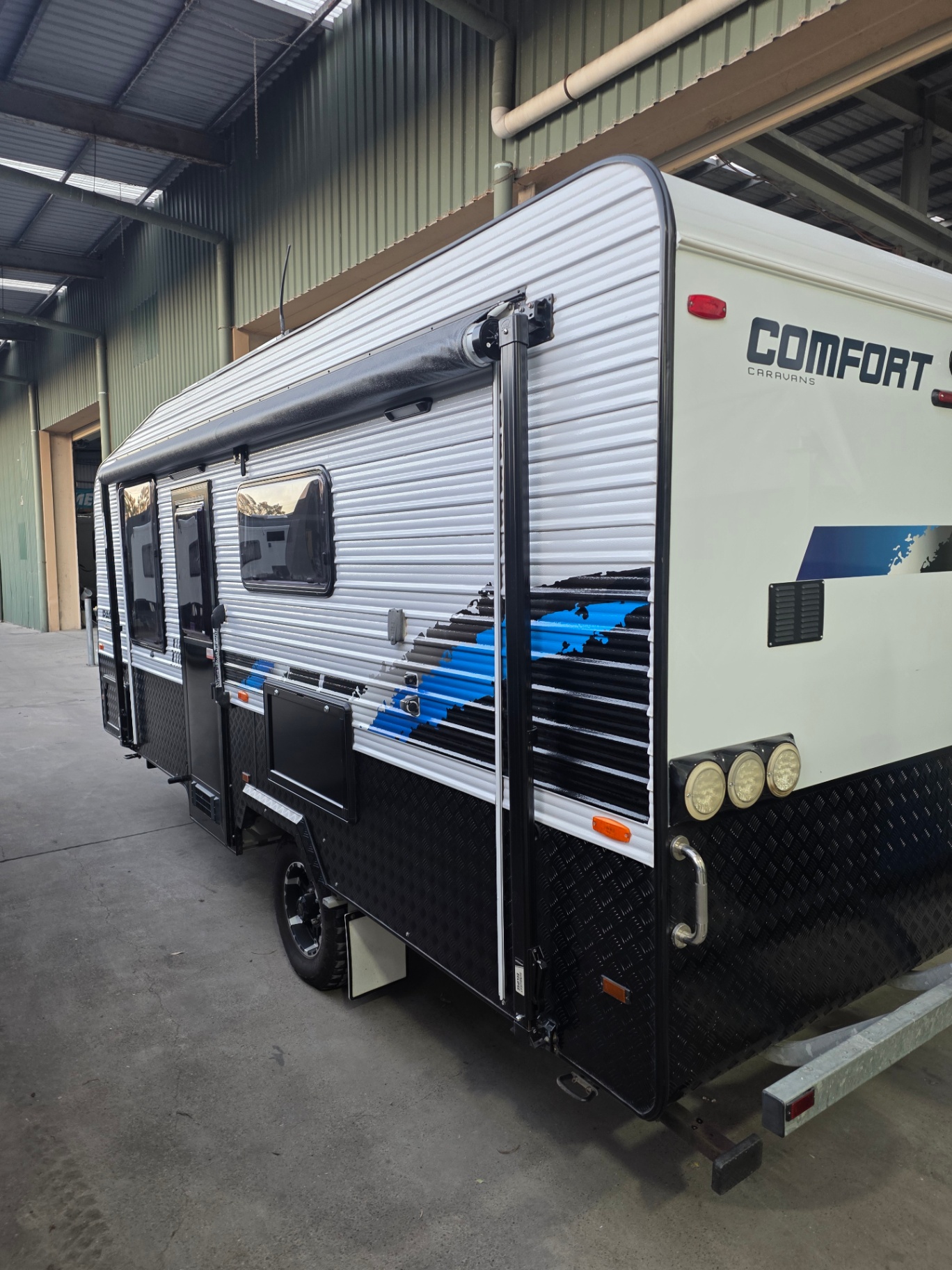
Two different jobs: removal and ghosting correction
People usually ask for decal removal and mean both. They're separate pieces of work with different outcomes, and it helps to know which one you actually need.
- 01Decal removalTaking off the physical vinyl or graphic and the adhesive layer bonded underneath it. This is a mechanical and chemical process — controlled heat to release the vinyl, then dedicated adhesive removers to clear the residue without attacking the surface.
- 02Ghosting correctionDealing with the outline that remains once the vinyl is gone. The surface hidden under the decal was protected from UV while everything around it faded, so it sits at a different condition and colour. Correction works on the surrounding weathered surface to bring the two closer together.
Why ghosting happens
A decal is effectively a sunscreen patch. Under it, the gelcoat or paint stays close to how it left the factory. Around it, years of Queensland UV do their work — the surface oxidises, fades and loses gloss.
Remove the decal after ten years and you're looking at two surfaces in different states of weathering, with a hard edge between them. The vinyl is gone but its shape is still perfectly readable.
How visible it ends up depends on how long the decal was there, how much sun that panel gets, and the colour. Dark colours and strongly pigmented panels usually show a sharper contrast than white.
What's realistic with ghosting
In most cases the outline can be significantly reduced by correcting the weathered surface around it until the two areas sit much closer in gloss and colour. On a lot of vans, once it's done and protected, you have to know where to look.
On some vans it can't be eliminated. If the surrounding surface has weathered further than can safely be corrected, the difference remains. We assess this before quoting and tell you what to expect rather than discovering it halfway through.
The process we follow
- 01Surface assessmentWe identify the decal type and age, the material underneath, and check for lifting, cracking, previous repairs or thin areas.
- 02Controlled decal removalMeasured heat softens the adhesive so the vinyl releases in sections rather than shattering into flakes. No scraping on painted or gelcoat surfaces.
- 03Adhesive removalResidual glue is broken down with adhesive removers appropriate to the surface, then lifted rather than rubbed off.
- 04Surface cleaningThe whole area is washed and decontaminated so no solvent or residue is left to interfere with correction.
- 05Machine correctionThe panel is machine polished to restore gloss and clarity to the exposed area and the surface around it.
- 06Ghosting reductionFocused work on the surrounding weathered surface to close the gap between the shielded area and the faded panel.
- 07Final refinementA refining pass to remove haze, then protection applied so the newly corrected surface isn't left bare.
Jobs we see most often
Vans being prepared for sale are a common one. Getting old branding off and the surface corrected consistently makes a noticeable difference to how the vehicle presents in photos and in person.
- Old dealership graphics and stickers along the rear or side
- Faded, cracking factory caravan decals and stripe packages
- Registration, branding and business signage on ex-work vehicles
- Previous owner decals, club stickers and travel badges
- Commercial motorhome graphics being removed before private sale
- Partially peeled decals that have started lifting and flaking
What affects the price
- How many decals there are and their total size
- Age and brittleness — old vinyl comes off in pieces and takes longer
- How much adhesive residue is left behind
- Whether ghosting correction is included
- Whether you want the surrounding panels corrected for an even finish
- Access, height and the shape of the panels involved
Decal work we've completed
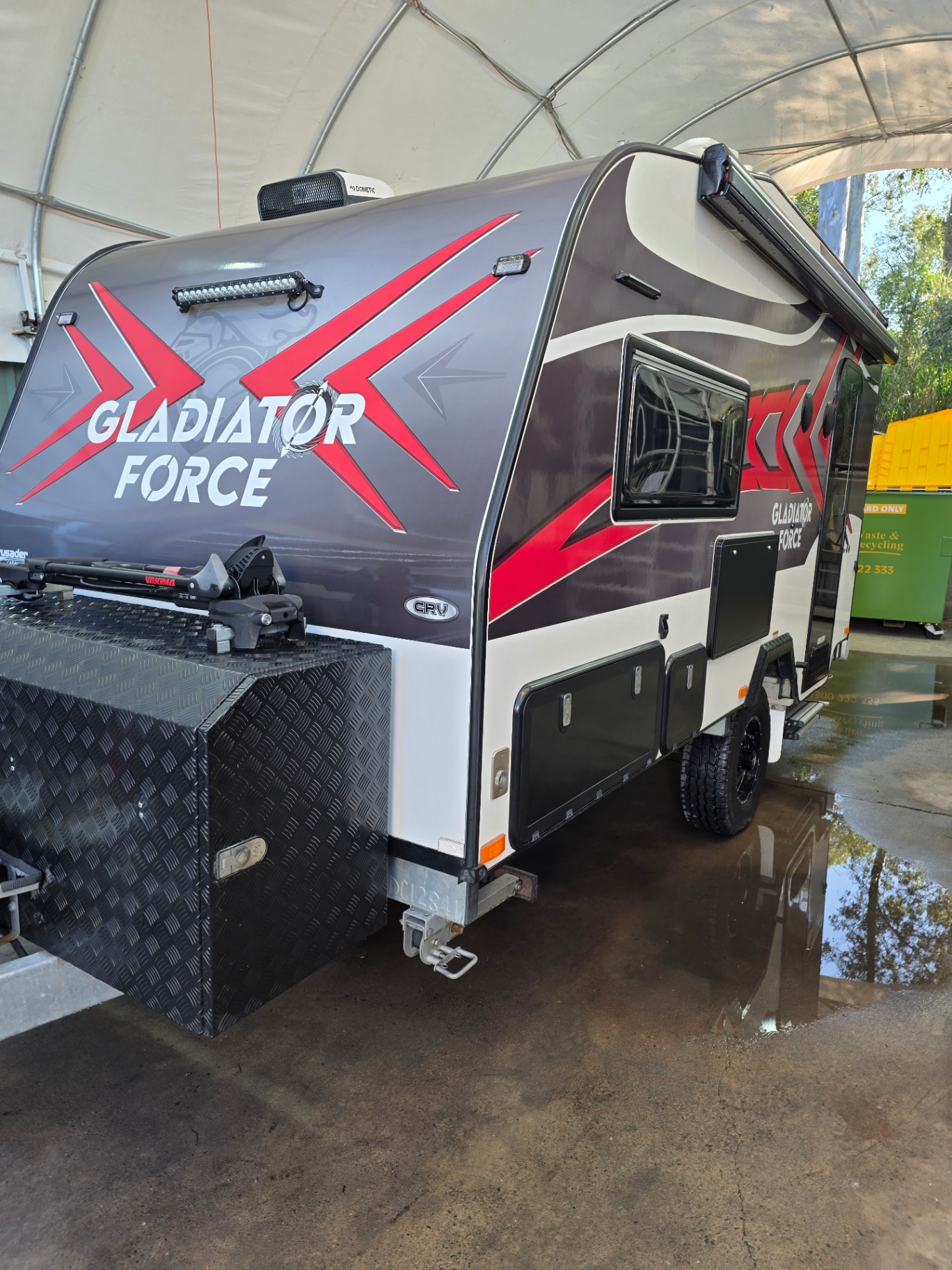
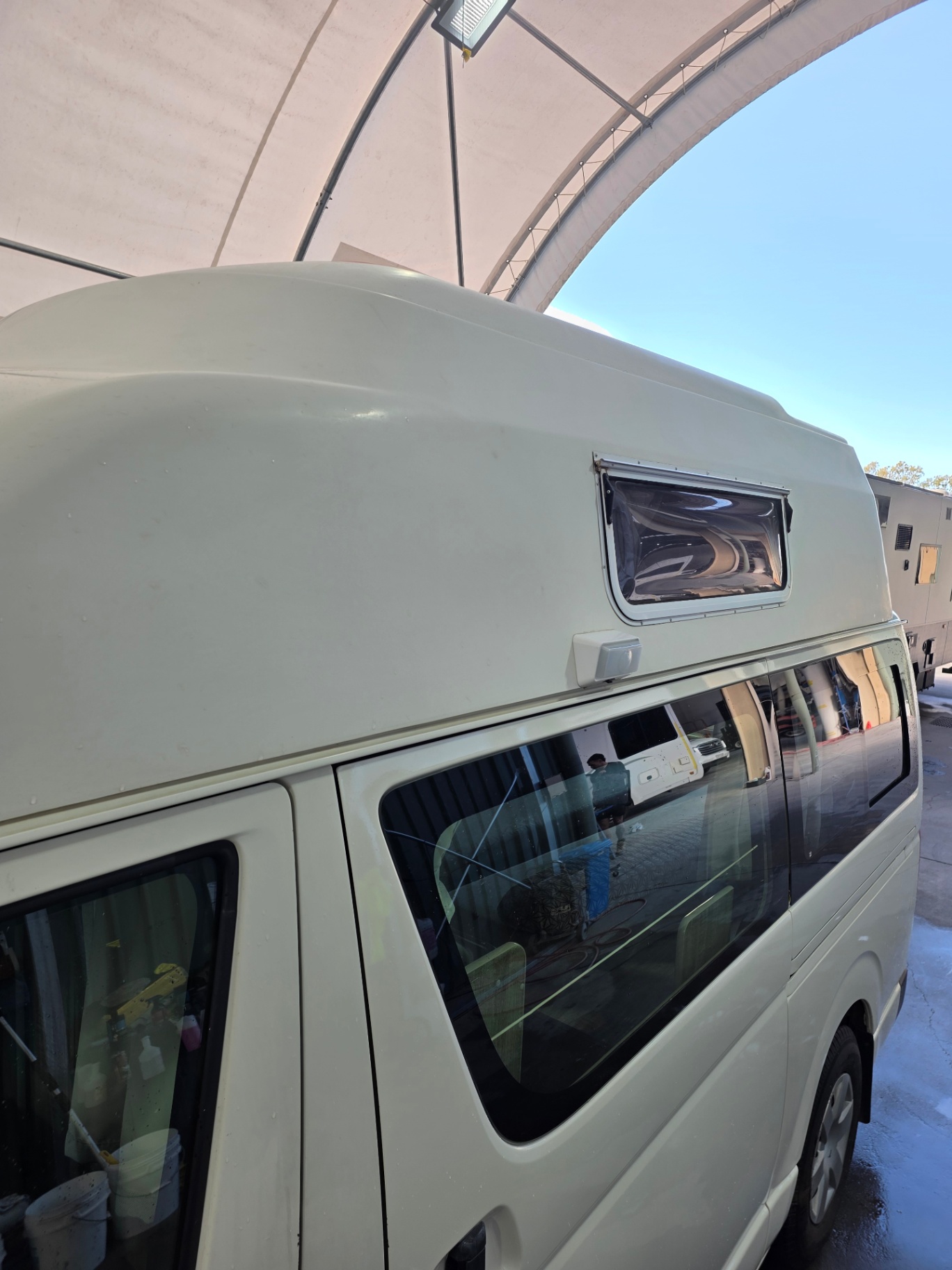
More completed vehicles are in the restoration gallery.
Pricing guide
Decal removal from $100
Final pricing depends on the number, size, age and condition of the decals and how much adhesive is left behind. Ghosting correction is quoted separately because it depends entirely on how far the surrounding surface has weathered.
Common questions
What is decal ghosting?
It's the visible outline left after a decal comes off. The surface under the decal was shielded from UV for years while everything around it weathered, so the two areas no longer match. The shape of the old graphic stays visible even though the vinyl is gone.
Can decal ghosting be removed completely?
Not always. Correcting the surrounding weathered surface reduces the difference and in many cases makes it hard to notice. On vans where the decal sat for a decade or more in full sun, some outline can remain permanently.
Will removing the decals damage the surface underneath?
Removed correctly, no. The risk comes from scraping, heat-gunning too aggressively or using harsh solvents, which can mark gelcoat or lift paint edges. Controlled heat and the right adhesive removers avoid that.
How much does caravan decal removal cost?
From $100. The final price depends on how many decals there are, their size, how old and brittle they are, how much adhesive is left behind and whether you want the underlying surface corrected afterwards.
Do I need the whole van polished after decal removal?
It's usually worth it. Correcting only where the decals were often leaves a bright patch against a duller panel. Doing the full side gives an even finish.
Can you remove decals from a motorhome or commercial vehicle?
Yes. Motorhome and ex-commercial graphics are common jobs, and they usually involve large panels and heavier adhesive than a caravan stripe.
Related services
Send photos of your decals
Photograph each decal you want removed, plus a wider shot of the panel it sits on. That tells us the age, condition and how much of the surrounding surface will need correcting.